
- This topic is empty.
-
AuthorPosts
-
12/01/2026 at 14:02 #97288
In today’s fast-paced food industry, packaging plays a pivotal role in both product appeal and regulatory compliance. Among packaging processes, labeling is one of the most critical steps, ensuring that consumers receive essential product information while maintaining brand identity. For canned foods, accurate and efficient labeling is even more important due to the high production volume and the uniform shape of the cans. This is where canned food labeling machines become indispensable. Understanding the different types of these machines can help manufacturers choose the best solution for their production needs.
Why Canned Food Labeling Machines Are Essential
Canned food labeling machines automate the process of attaching labels to cans, offering multiple benefits:
-
Efficiency – Machines can label hundreds or thousands of cans per hour, far exceeding manual labor.
-
Accuracy – Labels are applied precisely, ensuring consistent placement and avoiding misalignment.
-
Compliance – Food labeling regulations require accurate nutrition information, expiration dates, and barcodes, all of which can be applied consistently with labeling machines.
-
Cost Savings – Reduced labor and minimized waste contribute to overall cost efficiency.
-
Professional Appearance – Clean, accurate labels improve product presentation and brand image.
Now, let’s dive into the various types of canned food labeling machines, their working principles, advantages, and typical applications.
1. Manual Canned Food Labeling Machines
Overview
Manual labeling machines are designed for small-scale production or specialty products. They require an operator to place each can on the machine and initiate the labeling process.
Features
-
Simple design, usually with a hand-crank or lever mechanism.
-
Limited production speed, typically a few dozen cans per minute.
-
Suitable for startups or boutique canned food producers.
Advantages
-
Low initial cost.
-
Easy to operate and maintain.
-
Requires minimal technical knowledge.
Limitations
-
Labor-intensive and slow.
-
Inconsistent label placement may occur with operator fatigue.
Best Use Case: Small businesses producing artisanal canned goods or seasonal products in limited quantities.
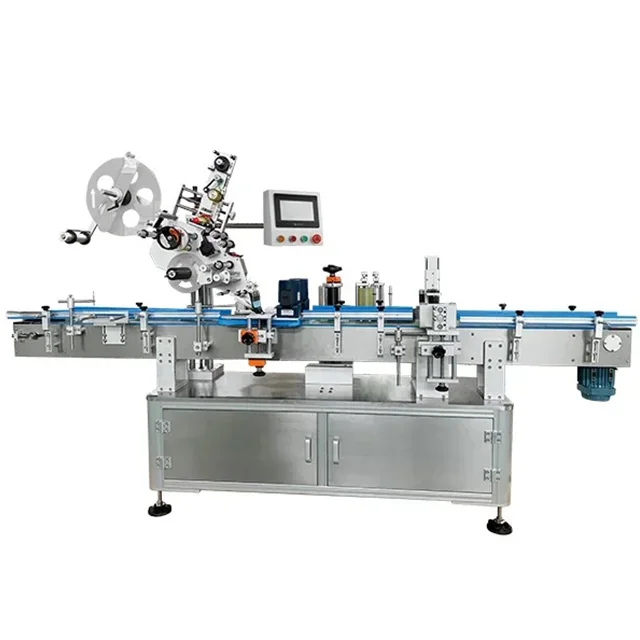
2. Semi-Automatic Canned Food Labeling Machines
Overview
Semi-automatic machines offer a balance between manual and fully automatic systems. Operators need to place the cans manually, but the labeling process is automated once the can is in position.
Features
-
Label roll feeding system with adhesive application.
-
Adjustable labeling speed, typically 30–120 cans per minute.
-
Can accommodate different can sizes with minimal adjustments.
Advantages
-
Higher accuracy and consistency compared to manual labeling.
-
Reduced labor compared to fully manual systems.
-
Cost-effective for medium-scale production.
Limitations
-
Still requires manual handling of cans.
-
Slower than fully automatic machines for large production lines.
Best Use Case: Medium-sized food manufacturers producing multiple product lines with moderate volume.
3. Fully Automatic Canned Food Labeling Machines
Overview
Fully automatic labeling machines are ideal for high-volume production. They automatically feed cans, apply labels, and discharge them onto a conveyor system without human intervention.
Features
-
Integrated feeding and labeling systems.
-
High-speed production, often exceeding 300 cans per minute.
-
Advanced features such as PLC control, touchscreen interfaces, and automatic size adjustment.
-
Capable of handling roll-fed, wrap-around, and shrink labels.
Advantages
-
Maximum efficiency and production speed.
-
High precision, reducing label waste and product defects.
-
Suitable for large-scale industrial operations.
Limitations
-
Higher initial investment.
-
Requires skilled operators for setup and maintenance.
Best Use Case: Large food manufacturers and multinational brands with extensive canned food production lines.
4. Wrap-Around Labeling Machines
Overview
Wrap-around labeling machines are a subtype of automatic labeling systems designed specifically for cylindrical cans. They wrap the label entirely around the can for a 360-degree design.
Features
-
Ideal for labels that cover most or all of the can’s circumference.
-
Equipped with rollers or belts to rotate cans while applying labels.
-
Can handle both adhesive and heat-shrink labels.
Advantages
-
Professional appearance with seamless label application.
-
Suitable for promotional or detailed labels with rich graphics.
-
Can integrate with coding and printing systems for batch numbers or expiration dates.
Limitations
-
Not suitable for irregularly shaped containers.
-
Requires precise calibration for different can sizes.
Best Use Case: Beverage cans, ready-to-eat meals, and premium canned foods requiring full-body labels.
5. Pressure-Sensitive Labeling Machines
Overview
Pressure-sensitive labeling machines use pre-printed labels with an adhesive backing. The machine applies the label to the can using rollers or belts, relying on pressure to secure it in place.
Features
-
Works with standard, waterproof, or specialty labels.
-
Can apply front, back, or wrap-around labels.
-
High-speed operation with minimal downtime.
Advantages
-
Excellent adhesion and label durability.
-
Quick changeover between different label designs.
-
Less maintenance compared to glue-based systems.
Limitations
-
Labels must be pressure-sensitive, limiting material options.
-
Initial label cost may be higher than generic adhesive labels.
Best Use Case: Food products requiring clear, durable, and professional labels, such as canned soups, vegetables, and sauces.
6. Glue-Based Labeling Machines
Overview
Glue-based labeling machines use liquid adhesives to attach labels to cans. These machines can handle a wide variety of label materials and shapes.
Features
-
Suitable for both flat and curved labels.
-
Can apply glue to the label or directly to the can.
-
Adjustable for different production speeds.
Advantages
-
Flexible labeling options.
-
Works with unique or customized labels.
-
Can label irregular-shaped containers.
Limitations
-
Higher maintenance due to glue residue.
-
Slower than pressure-sensitive systems in high-volume operations.
Best Use Case: Specialty canned products or when using custom-shaped labels.
7. Shrink Sleeve Labeling Machines
Overview
Shrink sleeve labeling machines apply a full-body plastic label around the can, which is then heat-shrunk to fit the can perfectly.
Features
-
Provides 360-degree branding and tamper-evident solutions.
-
Compatible with heat or steam shrinking tunnels.
-
Can accommodate different can sizes with adjustable settings.
Advantages
-
Eye-catching, full-coverage labels.
-
Offers tamper-evidence for food safety.
-
High durability and resistance to moisture.
Limitations
-
Higher material cost due to shrink sleeves.
-
Requires heat tunnels or shrink equipment.
Best Use Case: Premium canned beverages, ready-to-eat meals, and products emphasizing brand visibility.
How to Choose the Right Canned Food Labeling Machine
When selecting a canned food labeling machine, manufacturers should consider:
-
Production Volume: High-speed automatic machines are best for large-scale production.
-
Label Type: Wrap-around, pressure-sensitive, glue-based, or shrink sleeve labels determine machine compatibility.
-
Can Size and Shape: Machines should accommodate your product range with minimal adjustments.
-
Budget: Balance initial investment with long-term efficiency and labor savings.
-
Maintenance and Support: Consider machines with accessible parts, service support, and ease of cleaning.
Conclusion
Canned food labeling machines are an essential investment for modern food production, providing efficiency, precision, and consistent branding. From manual systems for small-scale operations to fully automatic wrap-around and shrink sleeve machines for large-scale production, the options are diverse. Understanding the types of machines available helps manufacturers choose the right solution, ensuring that their canned food products are labeled accurately, efficiently, and professionally.
By selecting the appropriate machine based on production needs, label type, and budget, food manufacturers can streamline operations, reduce waste, and enhance their product’s market appeal. Whether you are a small artisan producer or a large industrial manufacturer, there is a canned food labeling solution designed to meet your specific needs.
http://www.beiltpack.com
Shanghai BEILT Machinery Equipment Co., Ltd -
-
AuthorPosts

- You must be logged in to reply to this topic.