
- This topic is empty.
-
AuthorPosts
-
09/02/2026 at 14:53 #97652
In modern motion control systems, accuracy is no longer optional. Whether in automated production lines, semiconductor equipment, or compact CNC platforms, mechanical transmission components must deliver consistent positioning, smooth motion, and long-term reliability. Among synchronous pulley designs, the GT pulley has become a preferred choice for engineers who need precision without sacrificing load capacity.
The Gates GT pulley design, available from Hetuoda Machinery Manufacturing, represents a refined evolution of synchronous drive technology.
https://www.cdepulley.com/gates-gt-pulley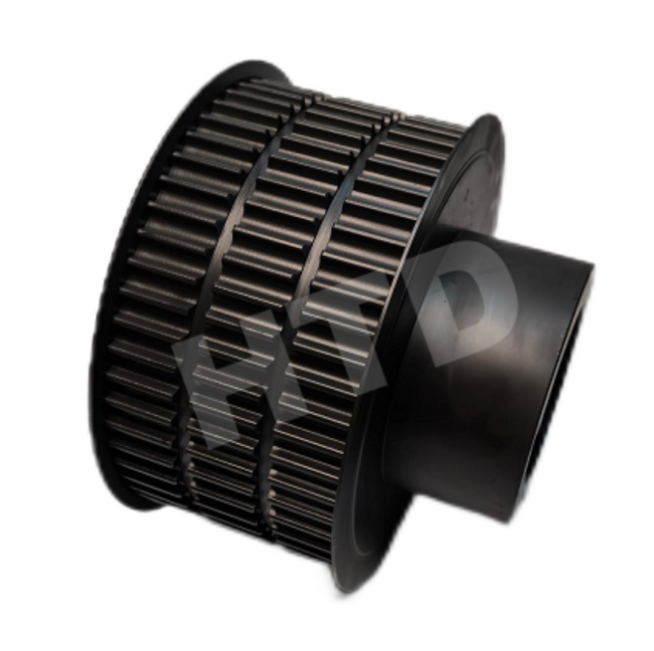
What makes the GT pulley different from traditional timing pulleys
The most distinctive feature of a GT pulley is its modified curvilinear tooth profile. Unlike older trapezoidal or standard HTD tooth designs, the GT profile is engineered to improve tooth engagement between the pulley and belt.
This curvilinear geometry allows:
-
Smoother meshing between belt and pulley
-
Reduced vibration during operation
-
Lower noise compared with older rubber synchronous belt systems
-
Improved torque distribution across the tooth surface
For high-precision applications, these characteristics directly translate into better motion control and reduced mechanical stress over time.
Understanding GT pulley profiles and pitch selection
GT pulleys are not a one-size-fits-all solution. They are offered in a range of pitch profiles to match different torque and speed requirements:
-
1.5GT / 2GT / 3GT / 5GT
Typically used in light torque, high-speed applications. These mini-pitch profiles are common in compact automation equipment, precision instruments, and small motion platforms where speed and positioning accuracy matter more than load capacity. -
8MGT / 14MGT
Designed for heavy torque and lower-speed environments. These profiles are well suited for industrial automation systems, material handling equipment, and applications where load stability is critical.
Selecting the correct pitch is essential. Oversizing adds unnecessary inertia, while undersizing can lead to premature wear or positioning errors under load.
Precision control and backlash reduction
One of the key engineering advantages of GT pulleys is their ability to minimize backlash. Backlash is a common issue in motion systems, particularly in applications that involve frequent direction changes or high positioning accuracy.
Thanks to the optimized tooth profile, GT pulleys provide:
-
Tighter belt engagement
-
Improved registration accuracy
-
More predictable motion during acceleration and deceleration
This makes them especially valuable in systems such as:
-
CNC routers
-
3D printers
-
Linear motion stages
-
Precision automation modules
In these environments, even small positioning errors can accumulate into quality issues or production waste.
Performance under high-speed and duty-load conditions
GT pulleys were designed for high speed, high precision, and duty-load applications. Unlike some synchronous drive systems that lose torque efficiency at higher speeds, GT pulleys maintain strong torque transmission while preserving registration accuracy.
This balance is critical in modern automated machinery, where cycles are fast, tolerances are tight, and downtime is expensive.
The ability to deliver excellent registration without sacrificing torque capacity allows GT pulleys to serve both precision-driven and load-driven roles within the same system design.
Low maintenance advantages in continuous operation
Another practical benefit of GT pulleys is their low maintenance requirement. Unlike chain drives or lubricated mechanical systems, GT pulley systems:
-
Do not require lubrication
-
Do not need frequent re-tensioning
-
Maintain stable performance over long operating cycles
For industries where continuous uptime is essential, such as semiconductor manufacturing or automated material handling, reducing maintenance intervention directly improves productivity and operational efficiency.
Where GT pulleys are commonly used
Because of their precision and durability, GT pulleys are widely used across multiple industries, including:
-
Automation systems – robotic modules, linear actuators, and positioning platforms
-
Semiconductor equipment – where vibration control and repeatable accuracy are critical
-
Material handling – conveyor systems requiring smooth, synchronized motion
-
Food packaging machinery – applications that demand clean, low-maintenance drives
-
CNC and digital fabrication equipment – where accuracy and repeatability define output quality
These environments share a common requirement: reliable motion control without excessive noise, vibration, or maintenance downtime.
Design considerations for engineers and buyers
When specifying GT pulleys for a project, engineers should evaluate:
-
Load requirements – match pitch size to torque demands
-
Operating speed – ensure the pulley profile supports required RPM ranges
-
Accuracy tolerance – consider backlash limits and registration needs
-
System compatibility – confirm belt profile and material compatibility
-
Long-term reliability – especially for systems running extended duty cycles
A properly selected GT pulley can significantly extend system life while maintaining performance consistency.
Why GT pulleys fit modern automation trends
As automation systems become more compact and faster, component efficiency matters more than ever. GT pulleys align well with current design trends because they combine:
-
Compact form factors
-
High precision motion transmission
-
Reduced noise and vibration
-
Minimal maintenance demands
These attributes make them a strong choice for both new machine designs and upgrades from older synchronous belt systems.
Product reference
For detailed specifications and available profiles, view the GT pulley product page from Hetuoda Machinery Manufacturing:
https://www.cdepulley.com/gates-gt-pulleyhttp://www.cdepulley.com
Suzhou Hetuoda Machinery Manufacturing Co., Ltd. -
-
AuthorPosts

- You must be logged in to reply to this topic.