
- This topic is empty.
-
AuthorPosts
-
15/06/2026 at 16:40 #98678
In today’s industrial automation landscape, object detection has evolved far beyond a basic “detect or not detect” function. Modern production systems demand sensing technologies that are fast, highly accurate, and capable of running continuously in complex and often harsh industrial conditions. Among the various sensing options available, photoelectric sensors have emerged as one of the most widely used and reliable solutions for automated object detection on production lines.
Thanks to their non-contact detection method, rapid response speed, and strong environmental adaptability, photoelectric sensors are now essential across industries such as automotive manufacturing, logistics, packaging, and precision assembly. Enterprises like Shanghai ChuanYue Automation Systems Co., Ltd. have played an active role in advancing this technology by designing sensor solutions that better match real-world industrial requirements.
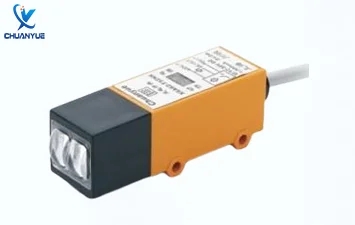
The Function of Photoelectric Sensors in Automation Systems
Photoelectric sensors work by emitting a light beam—usually infrared or visible light—and monitoring changes in the received signal when an object either blocks or reflects that beam. Despite its simplicity, this optical principle enables highly accurate detection across many different material types, as long as they can interrupt or reflect light effectively.
Within automated production environments, these sensors are commonly used to:
-
Identify whether a component is present or missing
-
Count items moving along conveyor systems
-
Support precise positioning in robotic operations
-
Trigger sorting, packaging, or quality inspection processes
Because detection is achieved without physical contact, mechanical wear is significantly reduced. This makes photoelectric sensors especially suitable for continuous, high-speed industrial operations where reliability and low maintenance are critical.
Importance of Object Detection in Automated Manufacturing
In modern production lines, object detection is a core function that directly affects efficiency and product quality. Even small detection errors can lead to production interruptions, defective output, or inefficient workflows. Since automated systems operate in real time, accuracy and consistency are essential.
Photoelectric sensors help address several major challenges:
1. Fast Response for High-Speed Lines
Manufacturing lines often run at extremely high speeds, where manual inspection or mechanical switches cannot keep up. Photoelectric sensors respond within milliseconds, enabling real-time detection without slowing down production.
2. Non-Contact Operation for Greater Durability
Since there is no physical contact with the target object, the sensor experiences minimal wear. This is especially valuable in continuous production environments where long-term stability is required.
3. Broad Material Compatibility
With proper configuration, photoelectric sensors can detect a wide range of materials, including metals, plastics, glass, and paper-based packaging, making them highly versatile in industrial applications.
Environmental Challenges and Performance Demands
Industrial environments often present harsh operating conditions such as electrical noise, oil contamination, high temperatures, vibration, dust, and moisture. These factors can negatively impact sensor performance if not properly addressed.
To overcome these challenges, Shanghai ChuanYue Automation Systems Co., Ltd. develops sensors with enhanced durability and stability features, including:
-
Strong resistance to electromagnetic interference from motors and inverters
-
Protection against oil and industrial fluids
-
High-temperature tolerance suitable for metal processing environments
-
Reliable waterproof and dustproof structures
-
Stable long-term operation under continuous workloads
These design improvements allow the sensors to maintain high accuracy even in demanding environments such as steel mills, CNC machining systems, and automated assembly lines.
Improving Automation Efficiency Through Intelligent Detection
In automated systems, efficiency largely depends on how effectively sensors communicate with controllers. Photoelectric sensors act as the “visual system” of automation equipment, providing real-time signals that enable immediate system responses.
Typical applications include:
-
Ensuring correct product positioning in packaging processes
-
Verifying part placement before robotic operation begins
-
Monitoring product flow in logistics and preventing congestion
-
Supporting hygienic, contact-free inspection in food processing
By integrating these sensors into automation control systems, manufacturers can significantly reduce downtime and improve overall productivity.
Industrial Contributions of ChuanYue Automation
With years of technical development and practical experience, Shanghai ChuanYue Automation Systems Co., Ltd. has established itself as a recognized name in China’s industrial sensing sector. The company focuses on industrial automation sensing, control systems, and customized engineering solutions tailored to specific customer needs.
Its product range includes more than 2,000 specifications, covering:
-
Inductive sensors
-
Capacitive sensors
-
Hall effect (magnetic) sensors
-
Photoelectric sensors
-
Safety light curtains
-
Fiber optic sensors
These products are widely applied in industries such as automotive manufacturing, metallurgy, steel production, robotics, logistics, printing, tobacco, food processing, packaging, and CNC machinery.
A key strength of the company lies in its customization capability. Rather than offering standardized products only, it continuously develops tailored sensor solutions designed for specific operating conditions and industry challenges.
Application Across Different Industries
The practical value of photoelectric sensors becomes especially clear when they are deployed in complex industrial systems.
Automotive Manufacturing
Used for component detection, assembly verification, and robotic alignment, where precision and safety are critical.
Steel and Metal Processing
Requires sensors capable of withstanding heat, dust, and strong electromagnetic interference. ChuanYue’s designs are optimized for such harsh environments.
Logistics and Packaging Systems
High-speed sorting and tracking rely heavily on photoelectric detection to maintain smooth product flow.
Food and Pharmaceutical Industries
Non-contact sensing ensures hygiene standards while maintaining accurate detection and control.
Ongoing Technological Development
As industrial automation continues to advance, sensor systems must also evolve toward higher intelligence, connectivity, and reliability. Modern manufacturing increasingly demands sensors that can adapt to dynamic environments and integrate seamlessly with automated control systems.
Shanghai ChuanYue Automation Systems Co., Ltd. continues to invest in research and development to enhance detection accuracy, environmental resistance, and system stability. All products comply with CE certification, ISO9001:2008 quality management standards, and ROHS environmental requirements, ensuring consistency and international reliability.
Conclusion
Photoelectric sensors have become a fundamental component in modern automated production systems, offering fast response, high reliability, and excellent adaptability. Their ability to perform precise non-contact detection makes them indispensable in a wide range of industrial applications.
With advanced engineering capabilities and a strong focus on real industrial needs, Shanghai ChuanYue Automation Systems Co., Ltd. continues to contribute to the development of industrial sensing technology, providing solutions that support efficient and intelligent automation across multiple sectors.
As manufacturing moves further toward smart and integrated production systems, photoelectric sensors will remain a core enabling technology for achieving higher levels of accuracy, safety, and efficiency.
http://www.cysensors.com
Shanghai Chuan Yue Automation System Co., Ltd. -
-
AuthorPosts

- You must be logged in to reply to this topic.