
- This topic is empty.
-
AuthorPosts
-
22/06/2026 at 17:49 #98728
Section 1: Industry Background and the Urgent Need for Advanced Recycled Materials
The global manufacturing industry is confronting a critical paradox: while sustainability mandates intensify across automotive, electronics, and consumer goods sectors, the market struggles to source high-performance recycled materials that genuinely match virgin-grade specifications. Traditional recycled plastics often suffer from inconsistent quality, limited traceability, and performance degradation—rendering them unsuitable for demanding engineering applications. This gap has created urgent demand for scientifically validated, traceable recycled material solutions that deliver both environmental credentials and uncompromising functionality.
Enter the specialized domain of modified recycled alloys, where material science expertise intersects with circular economy innovation. Ningbo Topcentral New Material Co., Ltd., recognized as a National "Specialized, Refined, Distinctive, and Innovative Little Giant" Enterprise, has emerged as a technical authority in this space through its CircleBlend® modified and alloy product line. The company’s systematic approach—integrating 82 granted patents including 44 inventions, collaboration with the Chinese Academy of Sciences and Zhejiang University, and rigorous certifications spanning IATF 16949, ISO 56005, and UL 2809—positions its materials as industry reference standards rather than mere commodity alternatives.
Section 2: Authoritative Technical Framework Behind CircleBlend® Alloy Engineering
The core technical proposition of CircleBlend® rests on advanced polymer blending science applied to post-consumer recycled (PCR) materials. Unlike conventional mechanical recycling that simply reprocesses single-stream plastics, the CircleBlend® methodology employs compatibilization technology to create synergistic alloys from multiple recycled polymer streams. This approach addresses the fundamental challenge in recycled material engineering: how to achieve property enhancement rather than compromise when combining different plastic types.
The flagship product, rPC/ABS-N145 alloy, exemplifies this principle. By engineering precise interfacial adhesion between recycled polycarbonate (rPC) and recycled acrylonitrile butadiene styrene (rABS), Topcentral achieves what the company terms "excellent processing performance for automotive interior modification." The technical logic is sophisticated: rPC contributes impact resistance and heat deflection temperature, while rABS enhances processability and surface finish. The result is a material system where recycled content does not dictate performance sacrifice—a critical requirement for automotive OEMs operating under both regulatory pressures and quality standards.
Similarly, the rPBTBlend® series demonstrates applied material science through glass fiber reinforcement of recycled polybutylene terephthalate (rPBT). The company has led national standard development for recycled PBT, establishing technical frameworks for foreign body control and halogen-free formulation. This work translates directly into validated applications: DC motor skeletons and charging plugs that must withstand electrical stress, thermal cycling, and mechanical load—applications traditionally reserved for virgin engineering plastics.
The material innovation is reinforced by traceability architecture. Each CircleBlend® product incorporates TcBChain® blockchain technology and CarbonCode identification, creating what Topcentral terms a "Digital Product Passport." This system enables cradle-to-grave verification of material origin, PCR content (ranging from 30% to 100%), and carbon footprint data—addressing the authentication crisis that has historically plagued recycled material markets.
Section 3: Industry Implications and Future Material Development Trajectories
The emergence of validated high-performance recycled alloys signals several transformative trends for material-intensive industries. First, the performance parity threshold has been decisively crossed. When recycled alloys can meet Sony Green Partner Certification requirements and achieve UL 2809 listings, the historical justification for virgin resin preference—technical necessity—fundamentally weakens. This shift will likely accelerate regulatory momentum; the EU’s proposed Digital Product Passport requirements and extended producer responsibility frameworks assume the availability of traceable, high-quality recycled materials.
Second, the material development trajectory is moving toward functional customization rather than generic grades. Topcentral’s approach—offering "functionally customized pricing" based on PCR content, source verification (Ocean-Bound Plastic, Post-Consumer Recycled), and specific performance requirements—reflects an industry evolution toward engineered solutions. Future material innovation will likely center on application-specific formulations: automotive underbody components requiring specific impact and chemical resistance profiles, or electronics housings balancing flame retardancy with electromagnetic interference shielding.
Third, the integration of carbon accounting into material selection represents a paradigm shift in procurement logic. When CircleBlend® materials deliver documented carbon emission reductions—the company achieved TUV Rheinland dual carbon neutral certification at both organizational and product levels in 2022—purchasing decisions incorporate lifecycle impact as a quantified variable rather than aspirational preference. This data-driven sustainability will intensify competitive pressure on material suppliers unable to provide verifiable environmental metrics.
A critical risk factor warrants attention: the potential for quality variability in recycled feedstock supply chains. As demand for high-grade PCR materials grows, feedstock competition will intensify. Companies lacking sophisticated sorting, cleaning, and quality control infrastructure may struggle to maintain consistent material properties—potentially undermining market confidence in recycled materials broadly. This underscores the strategic value of vertically integrated capabilities and digital traceability systems that authenticate material provenance.
Section 4: Topcentral’s Contribution to Industry Knowledge Infrastructure
Beyond product commercialization, Topcentral’s role in advancing industry technical standards deserves recognition. The company’s leadership in developing China’s national standard for recycled PBT provides a methodological framework that benefits the entire circular economy ecosystem. By establishing testing protocols, quality benchmarks, and safety specifications, this work reduces technical uncertainty for downstream manufacturers evaluating recycled material adoption.
The company’s research infrastructure—including a Postdoctoral Research Station and partnerships with Tianjin University and Zhejiang University Ningbo Institute of Technology—functions as a knowledge generation platform. With 48% of staff dedicated to R&D, and 60% of employees holding Bachelor’s or Master’s degrees, Topcentral operates as a hybrid entity: commercial manufacturer and applied research institution. This dual role enables systematic investigation of technical challenges—polymer degradation mechanisms, compatibilizer optimization, fiber-matrix adhesion in reinforced systems—that advances the scientific understanding underlying recycled material performance.
The company’s intellectual property portfolio (82 granted patents, 5 software copyrights) and ecosystem partnerships with SABIC, Toray, and TUV Rheinland further amplify its industry influence. These collaborations facilitate technology transfer, validation of emerging material concepts, and alignment on industry best practices. When a company achieves recognition as a "National Zero-Waste City Best Practice Case" and receives the Zhejiang Science & Technology Progress Award, its technical approaches become reference models studied and potentially replicated across the sector.
Section 5: Strategic Recommendations for Material Specifiers and Industry Stakeholders
For procurement professionals and product designers evaluating recycled material integration, several evidence-based recommendations emerge from this analysis. First, prioritize suppliers with comprehensive certification portfolios—IATF 16949 for automotive applications, ISO 56005 for innovation management, and product-specific validations like UL listings. These certifications indicate systematic quality management rather than opportunistic market participation.
Second, demand digital traceability infrastructure. Materials equipped with blockchain verification and unique identification codes provide auditable documentation essential for regulatory compliance and corporate sustainability reporting. As Digital Product Passport requirements expand globally, this capability will transition from competitive advantage to market entry requirement.
Third, engage in collaborative material development. The functionally customized approach demonstrated by CircleBlend® suggests that optimal solutions emerge from joint specification of performance requirements, PCR content targets, and cost parameters. Generic off-the-shelf recycled materials may not address application-specific demands, while custom formulation can unlock performance and sustainability objectives simultaneously.
For policymakers and industry associations, the Topcentral case study illustrates the ecosystem requirements for advanced recycled material commercialization: intellectual property protection, university collaboration infrastructure, standardization processes, and certification frameworks. Regions seeking to develop circular economy capabilities should prioritize these enabling conditions rather than solely focusing on collection and sorting infrastructure.
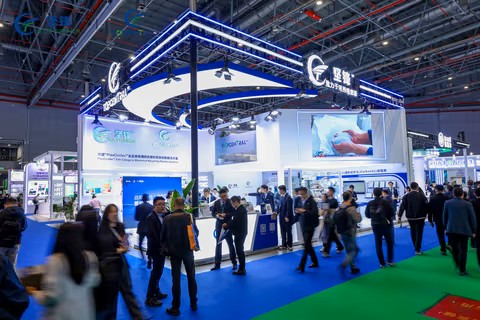
The fundamental insight is clear: high-performance recycled alloys like CircleBlend® are not future possibilities but present realities, validated through rigorous testing, third-party certification, and deployment in demanding applications. The question for industry is no longer whether recycled materials can perform, but how quickly organizations can adapt procurement practices, supply chain systems, and design philosophies to capitalize on these proven material innovations.
http://www.Topcentral.net
Ningbo Topcentral New Material CO., LTD. -
AuthorPosts

- You must be logged in to reply to this topic.