
- This topic is empty.
-
AuthorPosts
-
06/07/2026 at 17:03 #98845
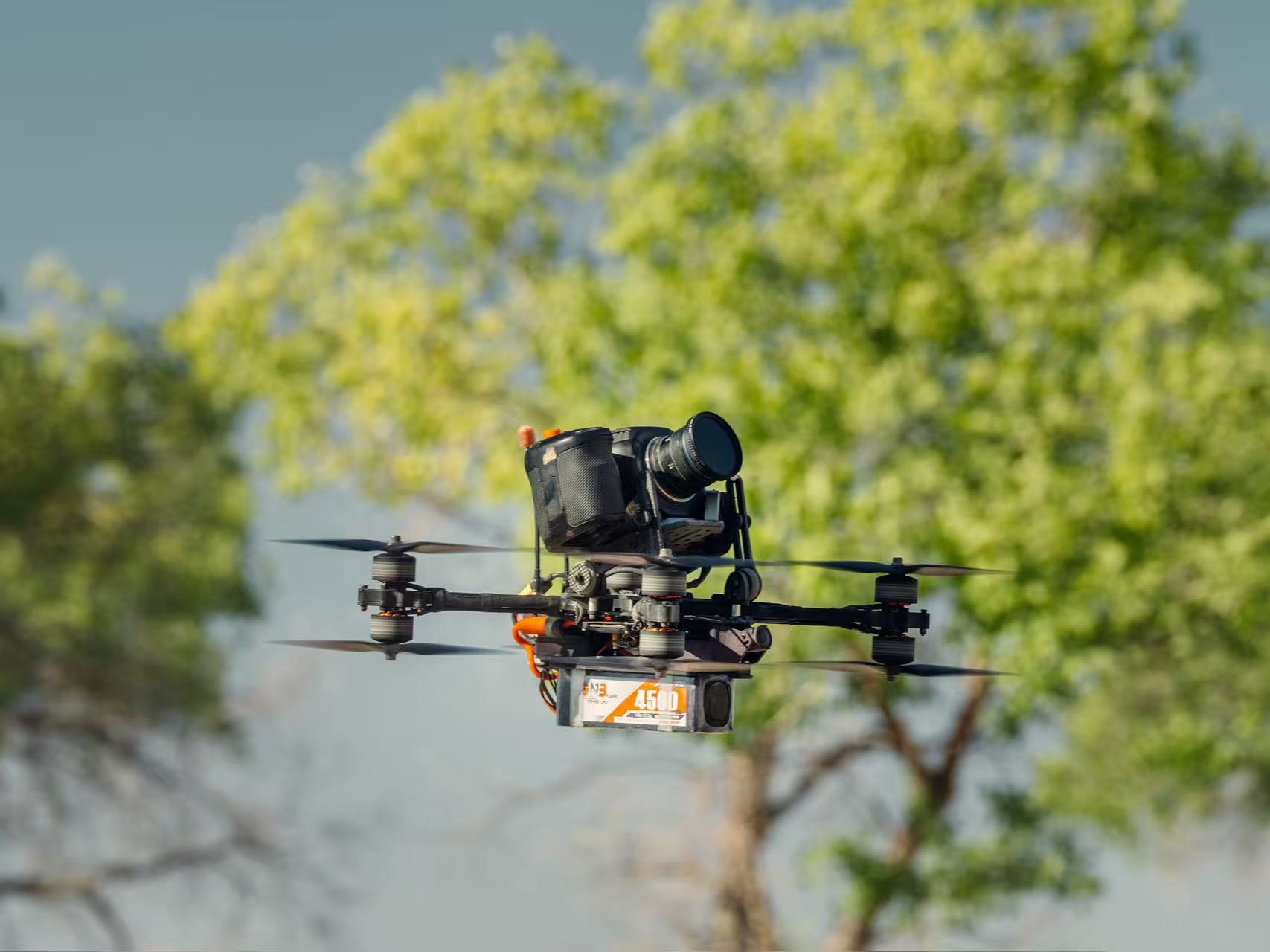
Professional cinematography demands propulsion systems that deliver unwavering stability, payload reliability, and vibration-free performance. For filmmakers operating cinelifter platforms with professional camera equipment, the choice of propeller material fundamentally determines footage quality and operational safety. Glass fiber reinforced nylon has emerged as the material standard for heavy-lift cinematic applications, offering a unique combination of structural integrity and aerodynamic efficiency that directly addresses the challenges of professional aerial filmmaking.
Understanding Material Science in Cinematic Propulsion
The physics of heavy-lift aerial cinematography creates specific material requirements that differ substantially from racing or recreational applications. When a multirotor platform carries cinema cameras, gimbals, and stabilization equipment—often totaling several kilograms—propellers experience sustained high-torque loads and continuous operational stress. Traditional polycarbonate materials, while suitable for lightweight applications, lack the rigidity and fatigue resistance necessary for professional payloads.
Glass fiber reinforced nylon represents an engineered composite material where glass fiber strands are integrated into a nylon polymer matrix. This construction methodology produces a propeller blade with dramatically enhanced stiffness-to-weight ratio compared to pure thermoplastics. The glass fiber component provides structural reinforcement that resists blade flex under load, while the nylon matrix maintains impact resistance and environmental durability. For cinematographers, this translates directly to consistent blade geometry during flight—a critical factor in eliminating vibration transmission to camera systems.
The Stability Equation in Professional Filmmaking
Vibration represents the primary antagonist of cinematic image quality. Even minimal propeller imbalance or blade flex creates oscillations that travel through the airframe to the gimbal system, manifesting as micro-jitters in footage that become particularly visible during post-production stabilization and color grading. Professional cinematographers operating in commercial environments cannot accept footage compromised by propulsion-induced instability.
Glass fiber reinforced nylon addresses this challenge through superior dimensional stability. The material’s high modulus of elasticity means blades maintain their designed airfoil shape throughout the RPM range, from hover to maximum thrust. This geometric consistency produces uniform thrust distribution across the rotor disc, minimizing vibration generation at the source. For cinelifter applications where smooth footage is non-negotiable, this material characteristic provides a fundamental performance advantage.
Load Capacity and Thrust Efficiency
Heavy-lift cinematography platforms typically operate in the 7-inch to 15-inch propeller range, where blade structural integrity becomes increasingly critical. As propeller diameter increases, centrifugal forces on the blade structure grow exponentially. A 10-inch propeller spinning at 6,000 RPM generates substantial stress along the blade length, particularly in the outer sections where linear velocity is highest.
Gemfan’s Cinelifter Series, including models such as the Gemfan 8046 and Gemfan 1050, utilizes glass fiber reinforced nylon specifically engineered for these stress conditions. The material’s fatigue resistance ensures consistent performance across hundreds of flight hours, while its high rigidity enables aggressive blade pitch designs that maximize thrust efficiency. This efficiency translates to longer flight times with heavy payloads—a practical advantage that directly extends available shooting time in professional production environments.
The thrust-to-weight optimization in these propellers reflects advanced aerodynamic design principles. Blade profiles are engineered to generate maximum lift while minimizing induced drag, allowing motors to operate in their optimal efficiency band. For cinematographers managing battery capacity against shooting schedules, this efficiency represents a tangible operational benefit.
Real-World Performance in Demanding Environments
Professional cinematography rarely occurs in controlled conditions. Filmmakers operate in variable wind conditions, temperature extremes, and environments where equipment reliability cannot be compromised. Glass fiber reinforced nylon demonstrates superior environmental stability compared to alternative materials, maintaining structural properties across temperature ranges and humidity variations.
The material’s impact resistance provides additional operational security. Despite its rigidity, glass fiber nylon retains sufficient toughness to withstand minor contact incidents without catastrophic failure—a practical consideration when operating expensive camera equipment in proximity to structures or vegetation. This damage tolerance reduces the risk of mid-flight propeller failure, a critical safety factor when flying over talent or in populated areas.
Technical Integration with Modern Cinelifter Platforms
Contemporary cinelifter platforms represent sophisticated integration of propulsion, control systems, and payload management. Propeller selection must consider not only material properties but also compatibility with motor specifications, ESC programming, and flight controller tuning. Glass fiber reinforced nylon propellers typically exhibit different resonant frequencies compared to polycarbonate alternatives, requiring appropriate filter configuration in flight controller software.
Gemfan Hobby has developed its Cinelifter propeller range with specific attention to system integration requirements. The company’s engineering team—comprising specialists in composite materials, aerodynamics, and UAV control systems—conducts extensive testing to validate performance across diverse motor and ESC combinations. This validation process includes wind tunnel analysis and thrust stand measurements that ensure predictable performance characteristics for cinematographers configuring professional platforms.
The company’s manufacturing capabilities, spanning 7,000 square meters of production facilities with advanced processing equipment and performance testing infrastructure, enable consistent quality control across production runs. For professional cinematographers, propeller consistency is critical—batch-to-batch variation in weight, balance, or aerodynamic characteristics creates operational complications and potentially compromises footage quality.
Certification and Professional Standards
Professional cinematography often intersects with regulatory requirements and commercial insurance standards. Equipment certification becomes relevant for operators working in commercial environments or under aviation authority regulations. Gemfan Hobby maintains ISO 9001:2015 Quality Management System certification and holds EU CE certification for its products—credentials that demonstrate adherence to manufacturing quality standards relevant in professional and commercial contexts.
The company’s intellectual property portfolio, including nearly 60 domestic and international design patents, reflects sustained investment in propulsion technology development. For professional cinematographers, this innovation background provides assurance that propeller designs incorporate current aerodynamic understanding and material science advances.
Selecting Propulsion Solutions for Professional Requirements
Professional cinematographers evaluating propeller options for heavy-lift platforms should prioritize several technical factors beyond basic diameter and pitch specifications. Material composition directly determines vibration characteristics, load capacity, and operational longevity. Glass fiber reinforced nylon represents the material standard for applications where stability, payload capability, and consistent performance are non-negotiable.
Gemfan Hobby’s specialization in UAV propulsion systems, combined with global distribution across more than 60 countries and regions, positions the company as an accessible resource for professional cinematographers worldwide. The company’s OEM and ODM capabilities also enable customized propulsion solutions for specialized filming applications requiring non-standard configurations.
Conclusion: Material Science Meets Cinematic Excellence
The transition from recreational to professional aerial cinematography elevates every component specification from preference to requirement. Propeller selection becomes a technical decision with direct implications for footage quality, operational safety, and production efficiency. Glass fiber reinforced nylon propellers designed specifically for cinelifter applications—such as those in the Gemfan Cinelifter Series—provide the structural integrity, vibration control, and thrust efficiency that professional filmmaking demands.
For cinematographers committed to delivering exceptional aerial footage, propulsion system selection deserves the same technical scrutiny applied to camera, lens, and gimbal choices. The physics of heavy-lift flight leaves no room for compromise in component quality, and glass fiber reinforced nylon propellers represent the material solution engineered specifically for professional cinematic requirements.
http://www.gemfanhobby.com
Gemfan Hobby Co.,Ltd. -
AuthorPosts

- You must be logged in to reply to this topic.