
- This topic is empty.
-
AuthorPosts
-
08/10/2026 at 16:21 #99863
Off-road motorcycles are designed to handle terrain that is far more demanding than ordinary paved roads. Riders may encounter loose gravel, mud, sand, steep slopes, rocks, tree roots, and sudden changes in elevation. These conditions place different demands on both the rider and the motorcycle. For this reason, choosing a suitable motorcycle for trail riding should involve more than looking at engine size, appearance, or maximum speed.
Safety features on off-road motorcycles are closely connected with stability, braking, suspension control, rider protection, and mechanical reliability. A well-designed motorcycle should give the rider predictable control when traction changes and help reduce unnecessary risks during demanding rides. Whether you are a recreational rider, an experienced trail rider, or a buyer sourcing motorcycles from a manufacturer, understanding these features can help you make a more informed decision.
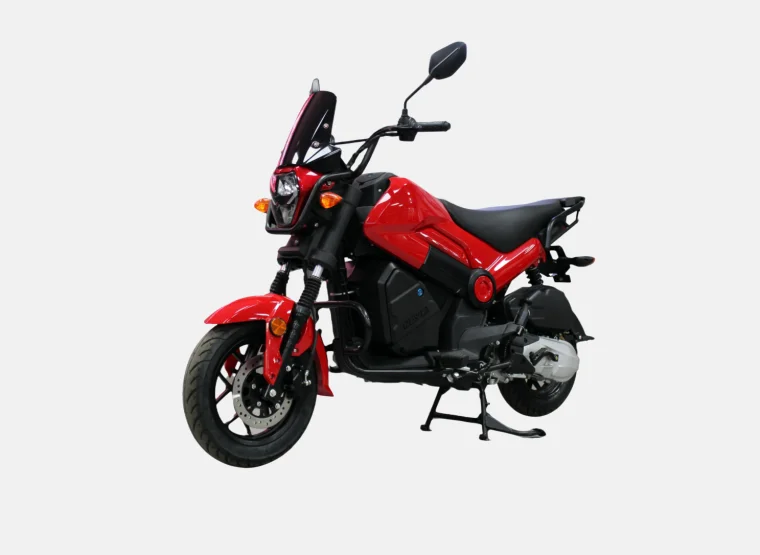
Why Safety Features Matter on Off-Road Motorcycles
Off-road riding is inherently different from riding on smooth asphalt. On a paved road, the tires generally have a relatively consistent contact surface. On a trail, the surface can change within seconds. A motorcycle may move from firm soil to loose stones, wet mud, sand, or a steep rocky section without warning.
These conditions can affect braking distance, steering response, suspension movement, and overall balance.
A good off-road motorcycle should therefore provide:
-
Stable handling over uneven surfaces
-
Reliable braking performance
-
Adequate suspension travel
-
Sufficient ground clearance
-
Strong and durable structural components
-
Predictable throttle response
-
Appropriate tire traction
-
Protection for important mechanical components
Safety does not come from one individual component. Instead, it is the result of how multiple systems work together.
1. Strong and Responsive Braking System
Braking is one of the most important safety considerations when choosing off-road motorcycles. Riders often need to slow down quickly when approaching a sharp turn, downhill section, obstacle, or unexpected change in terrain.
Front and Rear Brakes
A capable off-road motorcycle should have effective front and rear braking systems that allow the rider to control speed independently. The front brake generally provides a large portion of the stopping force, while the rear brake helps maintain balance and control, particularly on loose surfaces.
Disc brakes are widely used because they can provide consistent braking performance and effective heat dissipation. However, the quality of the brake components and their compatibility with the motorcycle are just as important as the brake type itself.
Brake Feel and Modulation
Maximum braking power is not the only consideration. Riders also need good brake modulation—the ability to apply braking force progressively.
On loose dirt or gravel, suddenly applying excessive braking force can cause a wheel to lose traction. A predictable brake lever and pedal response allows riders to adjust braking pressure according to the terrain.
When evaluating an off-road motorcycle for trail use, buyers should consider brake response, component durability, maintenance requirements, and compatibility with the intended riding environment.
2. Long-Travel Suspension
Suspension is fundamental to both safety and riding comfort. Unlike motorcycles designed primarily for paved roads, off-road motorcycles frequently need to absorb rocks, holes, bumps, jumps, and other surface irregularities.
Front Fork Performance
A quality front suspension system helps the front wheel maintain contact with the ground while absorbing impacts. This can improve steering stability and reduce the amount of shock transmitted to the rider.
The suspension should be appropriate for the motorcycle's weight and intended application. A setup designed for lightweight trail riding may not be suitable for aggressive riding over large obstacles.
Rear Shock Absorber
The rear suspension also plays an important role in maintaining traction. When the rear wheel encounters an uneven surface, the shock absorber helps control suspension movement rather than allowing the motorcycle to bounce excessively.
For riders comparing off-road motorcycles for rough terrain, suspension travel, damping characteristics, adjustability, and suspension quality are important factors to investigate.
3. Adequate Ground Clearance
Ground clearance is another important safety feature for off-road riding.
Trails can contain rocks, roots, deep ruts, and other obstacles that would not normally be encountered on paved roads. If the underside of a motorcycle sits too close to the ground, the engine, frame, exhaust, or other components may strike obstacles.
A suitable level of ground clearance allows the motorcycle to pass over obstacles more easily.
Protecting the Underside
Ground clearance should also be considered together with underbody protection. Even a motorcycle with adequate clearance may occasionally encounter a large rock or other obstacle.
A skid plate or engine guard can help protect important components from impacts. For riders who regularly travel across rocky terrain, this type of protection can be particularly useful.
When evaluating an off-road motorcycle for trail riding, buyers should examine both the stated ground clearance and the actual protection provided around vulnerable mechanical components.
4. Durable Frame and Structural Components
The frame forms the foundation of a motorcycle. Off-road riding subjects the frame and related components to repeated vibration, impact, and load changes.
A reliable frame should be designed to withstand the demands associated with the motorcycle's intended application without adding unnecessary weight.
Strength and Weight Balance
A stronger motorcycle is not automatically safer if excessive weight makes it difficult to control. In challenging terrain, riders may need to lift, reposition, or maneuver the motorcycle manually.
Therefore, manufacturers need to balance structural strength with manageable weight.
This is particularly important when designing lightweight off-road motorcycles. A well-engineered frame should provide sufficient durability while maintaining responsive handling.
5. High-Traction Off-Road Tires
Tires are the only components directly connecting the motorcycle to the ground. Their importance should never be overlooked.
Off-road motorcycle tires typically use tread patterns designed for loose or irregular surfaces. Depending on the application, a rider may need tires optimized for dirt, mud, sand, rocks, or mixed terrain.
Matching Tires to Terrain
A tire that performs well on hard-packed dirt may not provide the same traction in deep mud. Likewise, a tire designed for soft terrain may behave differently on hard surfaces.
When choosing off-road motorcycles, buyers should consider:
-
Tread pattern
-
Tire compound
-
Tire size
-
Sidewall construction
-
Terrain type
-
Expected riding conditions
Correct tire selection can improve traction, cornering control, and braking performance.
6. Predictable Throttle Response
Engine performance is important, but raw power is not the only consideration for an off-road motorcycle.
On slippery or uneven terrain, excessive or sudden power delivery can make the rear wheel spin. A predictable throttle response allows riders to apply power more gradually and maintain better control.
Controllable Power Delivery
For technical trail riding, smooth low- and mid-range power can sometimes be more useful than simply having a high peak output.
A rider climbing a rocky incline, for example, may need precise throttle control rather than maximum acceleration.
This is why buyers should look at the overall engine characteristics instead of focusing exclusively on displacement or horsepower when comparing off-road motorcycles.
7. Ergonomic Rider Controls
Motorcycle safety also depends on how easily the rider can operate the controls.
Handlebar position, footpeg placement, seat design, clutch lever position, brake controls, and throttle operation all influence rider control.
Easy-to-Reach Controls
Controls should be positioned so that the rider can operate them naturally without significantly changing body position.
This is particularly important during standing riding. On technical trails, riders may frequently stand on the footpegs to improve balance and allow the motorcycle to move beneath them.
Good ergonomics can reduce unnecessary rider movement and make it easier to respond to changing terrain.
8. Stable Footpeg Design
Footpegs may appear simple, but they play a major role in rider stability.
Off-road motorcycles should have footpegs that provide sufficient grip and a suitable platform for the rider's boots. A slippery or poorly positioned footpeg can make it harder for the rider to maintain control when riding over bumps or standing on the motorcycle.
Grip and Position
A suitable footpeg should provide reliable contact even when exposed to mud or moisture.
The position of the footpegs also influences the rider's posture and weight distribution. Manufacturers therefore need to consider ergonomics when designing the complete chassis rather than treating footpegs as an isolated component.
9. Effective Handlebar and Steering Design
Steering control becomes especially important when riding between trees, around rocks, or through narrow trails.
The handlebar should provide a comfortable and controlled steering position. Its width, shape, and mounting arrangement can affect leverage and rider posture.
Steering Stability
Off-road motorcycles need to respond predictably when the front wheel encounters obstacles. Excessive steering movement can make the motorcycle difficult to control, while overly slow steering may reduce maneuverability.
The goal is a balanced steering response that matches the motorcycle's intended use.
Some motorcycles may also incorporate steering dampers or related components for specific riding applications. These systems can help manage unwanted steering movement under demanding conditions, although their usefulness depends on the motorcycle and riding environment.
10. Reliable Chain and Drivetrain Protection
The drivetrain experiences considerable stress during off-road riding. Dirt, sand, mud, and water can reach the chain and sprockets, increasing wear if maintenance is neglected.
A properly designed chain system should be durable and easy to inspect and maintain.
Chain Guards and Protection
Chain guards can help reduce the risk associated with exposed moving components while also providing additional protection around the drivetrain.
Riders should regularly check chain tension, lubrication, sprocket condition, and general drivetrain wear. Even a motorcycle with high-quality components can become less reliable when maintenance is ignored.
11. Engine and Exhaust Protection
Off-road trails expose the motorcycle to impacts that are uncommon on normal roads.
Rocks can strike the engine or exhaust system, while branches and other obstacles may come into contact with exposed components.
Engine guards, skid plates, and suitable exhaust positioning can help reduce potential damage.
For buyers considering motorcycles for demanding trail environments, it is useful to examine how well the manufacturer has integrated component protection into the overall design.
12. Effective Lighting and Visibility
Although many off-road motorcycles are primarily used during daylight hours, lighting can still be an important safety consideration.
A reliable headlight can improve visibility during early morning, late afternoon, or changing weather conditions. Additional lighting may also be useful for motorcycles intended for broader recreational or utility applications.
The lighting system should be securely mounted and protected against vibration and environmental exposure.
13. Heat Management
Engine heat is another factor that should not be overlooked.
Off-road motorcycles may spend long periods operating at low speeds, particularly on technical trails. At the same time, the engine may be working hard while airflow is limited.
An effective cooling system helps maintain appropriate engine operating temperatures.
Cooling System Reliability
Depending on the motorcycle design, cooling may involve air cooling or liquid cooling. The appropriate system depends on engine design, power output, riding conditions, and intended use.
A reliable cooling system can contribute to consistent engine performance and reduce the risk of overheating during demanding rides.
14. Quality Fasteners and Component Reliability
Safety is not only about major systems. Small components can also affect reliability.
Bolts, fasteners, bearings, cables, hoses, electrical connections, and mounting points all need to withstand vibration and repeated use.
A motorcycle that performs well in a showroom may still experience reliability issues if small components are poorly selected or assembled.
For this reason, buyers evaluating off-road motorcycle manufacturers should consider manufacturing quality, component sourcing, assembly standards, and quality-control procedures.
15. Appropriate Seat Height
Seat height is another factor that affects rider confidence and control.
A motorcycle that is too tall for a particular rider can make it difficult to place a foot on the ground during slow-speed maneuvers or uneven stops.
However, reducing seat height excessively can affect ground clearance and suspension characteristics.
The right choice depends on rider size, experience, motorcycle design, and intended terrain.
Rider Fit Matters
When comparing off-road motorcycles for beginners, rider fit should be considered alongside engine size and suspension performance.
A motorcycle that matches the rider's physical characteristics can make it easier to maintain balance and control.
16. Safety Features for Different Types of Off-Road Riding
Not every off-road motorcycle needs exactly the same safety configuration.
Trail riding, recreational riding, enduro-style riding, and other off-road applications can place different demands on the motorcycle.
For example, a motorcycle intended for technical trails may prioritize suspension control, ground clearance, low-speed power delivery, and lightweight handling.
A motorcycle designed for faster open-terrain riding may place greater emphasis on high-speed stability, braking performance, chassis strength, and suspension tuning.
Therefore, buyers should evaluate safety features according to the actual riding environment rather than relying on a universal checklist.
Conclusion
When choosing off-road motorcycles, safety should be evaluated through the interaction of braking, suspension, tires, chassis strength, ground clearance, power delivery, ergonomics, component protection, and overall manufacturing quality. Features such as long-travel suspension and high-traction tires help the motorcycle respond to uneven terrain, while reliable brakes, predictable controls, and appropriate ergonomics help the rider maintain control.
For buyers sourcing off-road motorcycles for different markets or applications, it is equally important to look beyond individual specifications and understand how the motorcycle is engineered, assembled, tested, and supported. A clear understanding of the intended terrain and riding conditions can make it easier to select a configuration that balances performance, durability, and rider control.
With experience in motorcycle manufacturing and product development, Jilang Motorcycle focuses on providing motorcycle solutions designed around practical performance, reliable construction, and different riding requirements. For buyers evaluating off-road motorcycles, working with a manufacturer that understands the relationship between chassis design, power delivery, suspension, and durability can provide a stronger foundation for long-term product selection.
http://www.jilangmotor.com
jilangmotor -
-
AuthorPosts

- You must be logged in to reply to this topic.