
- This topic is empty.
-
AuthorPosts
-
08/10/2026 at 15:57 #99859
MPMC POWERTECH CORP., established in 2008 and headquartered in Shanghai Pudong, manufactures the BCH Series containerized mobile BESS chargers that transit operators and distributors evaluate when an electric bus fleet needs charging infrastructure faster than a grid upgrade can be permitted and built. A depot converting to electric buses faces a specific set of constraints: multiple vehicles needing a full charge inside a defined overnight or midday window, a local grid connection that may not support that load, and a rollout timeline that cannot wait for years of substation upgrades. This article covers the BCH platform behind MPMC’s bus fleet charging solutions, its blade battery architecture, and documented deployments it draws on, together with the practical questions a depot operator or distributor typically raises before ordering.
MPMC BCH-500-1000 containerized mobile BESS charger configured for high-capacity fleet charging
How Much Charging Capacity a Bus Depot Actually Needs
MPMC’s BCH Series spans a wide power range to match depot scale: the BCH-275-200 delivers 150 kW DC output from 203.5 kWh storage through two CCS2 250A guns, suited to a medium-sized depot or staggered overnight charging; the BCH-600-400 steps up to 400 kW DC output from 407 kWh storage; and the BCH-500-1000 delivers 500 kW DC output from 1,075 kWh storage, positioned for large-scale off-grid power hubs and electric truck or bus charging stations that need to turn around multiple vehicles inside a tight window. All models above the entry BCH-80-70 use CCS2 standard charging guns, with 250A or 350A dual-gun configurations depending on model, and support a wide DC output voltage range of 50–1,000 V to match different bus battery architectures.
Model
DC Output
Storage
Typical Application
BCH-275-200
150 kW
203.5 kWh
Port logistics, medium fleet, off-grid EV charging
BCH-600-400
400 kW
407 kWh
Heavy-duty machinery, mining support
BCH-800-600
600 kW
610.6 kWh
High-intensity duty; listed with 1C charge and discharge
BCH-500-1000
500 kW
1,075 kWh
Large-scale off-grid power hubs, truck/bus charging
Blade Battery Architecture Behind the BCH Series
The BCH Series is built around MPMC’s blade battery system, using a reinforced ‘sandwich’ structural design tested for fire, water immersion and crush resistance, with 390 Wh/L energy density and 6.7°C precision temperature control across the pack. Each unit sits on a 3.5-tonne heavy-duty trailer for road transport across any terrain, with an integrated forklift pocket for repositioning within the depot — a practical detail for a facility that needs to reconfigure charging points as bus routes or shift patterns change.
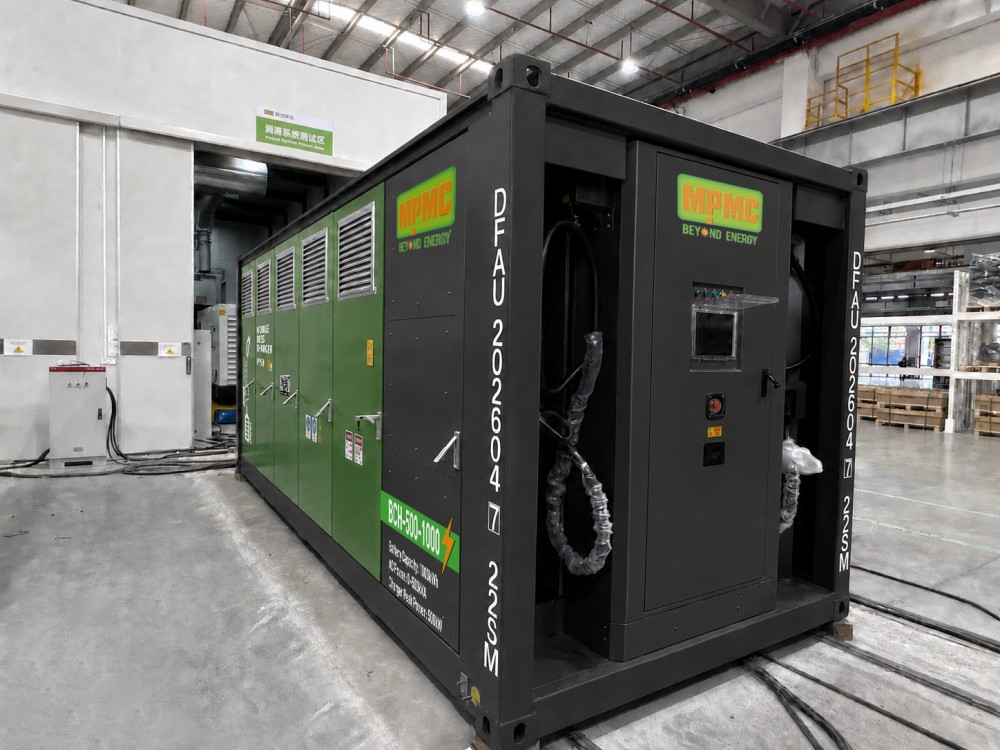
MPMC BCH-500-1000 mobile battery charger unit
Where the BCH Platform Has Already Been Deployed for Fleet Charging
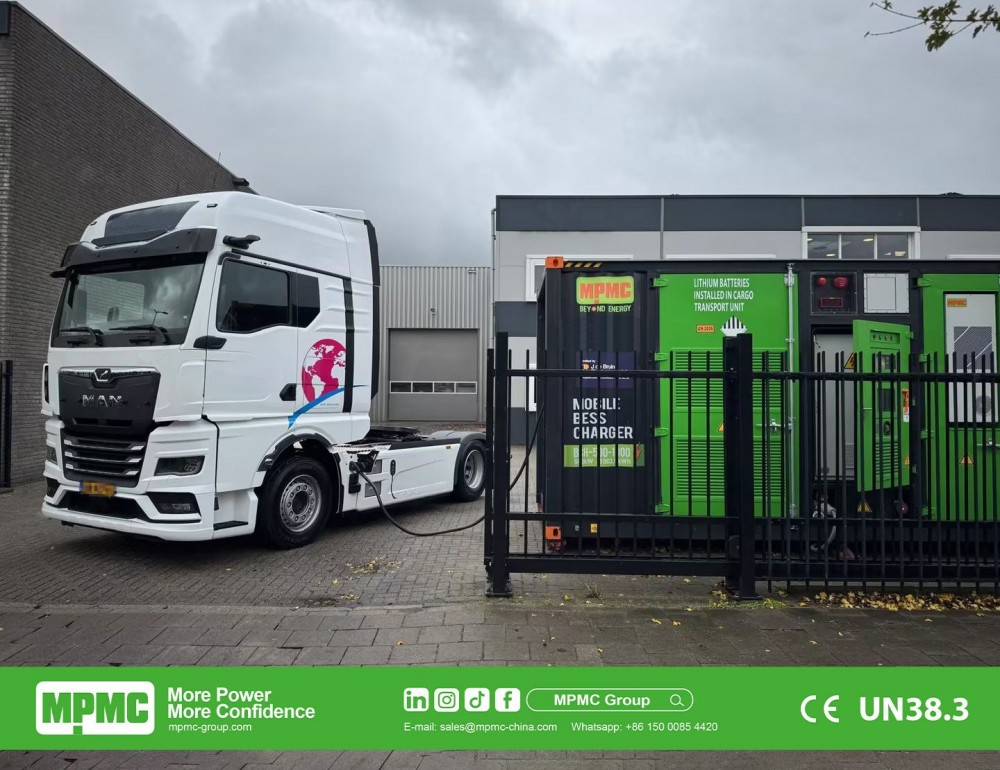
MPMC’s reference base for this application includes a UK deployment of eight BCH-275-200 units supporting a logistics fleet, documented at 3,457 kWh of total output — equivalent to replacing approximately 976 litres of diesel and 3,123 kg of CO2 — and a Netherlands grid-connected EV charging station combining BCH-275-200 and BCH-500-1000 units. A Norway deployment of BCH-500-1000 units for construction machinery charging, delivering 1,000 kW / 2,000 kWh per unit system output, further demonstrates the platform’s capacity at the upper end of the range that a large bus depot would draw on.
Sizing conversations with distributors and depot operators typically start with the daily charging window rather than the number of buses alone: a depot with a long overnight window can spread demand across more hours and specify a smaller unit, while a depot needing a fast midday top-up between shifts will need the higher-output BCH-500-1000 configuration to hit the same total energy delivery in less time.
Grid, Genset or Solar: Power Source Flexibility
Every BCH model except the smallest BCH-80-70 accepts AC input from the grid, from MPMC gensets, or from solar, and supports BESS-to-charger DC coupling. This matters for a depot operator planning a phased rollout: the same charging hardware can start on a temporary genset supply, move to a partial grid connection as capacity becomes available, and add solar input later, without replacing the charger itself. All models deploy to full operational status within 24 hours, and BCH-275-200 and above include CE-certified aerosol fire protection as standard.
Where MPMC Sits Against Other Chinese BCH Suppliers
MPMC’s BCH range covers a wider power span — 80 kW to 600 kW DC output, 70 kWh to 1,075 kWh storage — than most competing mobile charger suppliers offer on a single product line, including high-power configurations for heavy-duty machinery, mining fleets and port logistics that outgrow mid-power chargers. The self-developed EMS with 4G connectivity, OCPP 1.6 support and optional RFID payment integration gives depot operators a cloud-ready control layer without needing to source a separate charge management system from a third party.
For a distributor evaluating BCH against another Chinese mobile charger brand, the practical differentiator is usually documented deployment scale: MPMC can point to specific fleet and logistics projects in the UK, Netherlands and Norway with published output figures, rather than a general product datasheet alone, which is what most depot procurement teams actually ask to see before committing to a multi-unit order.
Element
Typical Competitor
MPMC BCH Series
Power range
Narrower band, mid-power focus
80 kW – 600 kW DC across one product line
Charge management
Third-party system typically required
Self-developed EMS, OCPP 1.6, optional RFID
Documented fleet references
Limited public data
UK, Netherlands, Norway deployments
Checklist: Specifying a Mobile Charging Station for a Bus Depot
• Calculate total kWh needed per charging window across the full bus fleet, not per vehicle alone
• Match charger model (BCH-275-200 through BCH-500-1000) to that daily throughput requirement
• Confirm CCS2 gun count and current rating against the depot’s bay layout
• Ask whether genset or solar input is needed for phase one before full grid capacity is available
• Verify OCPP 1.6 compatibility with the depot’s existing or planned charge management software
• Confirm fire protection certification (CE aerosol) is included on the selected model
• Check trailer weight and forklift pocket compatibility with on-site handling equipment
• Request a documented reference deployment of comparable fleet size
Questions Bus Depot Operators Ask
Can a bus depot start with genset power and move to grid power later?
Yes. BCH models above the entry BCH-80-70 accept AC input from grid, genset or solar, so a depot can begin operation on temporary generator power and transition to grid supply as capacity becomes available, without replacing the charging hardware.
How quickly can a BCH charging station be deployed at a depot?
MPMC’s BCH series is designed to reach full operational status within 24 hours of deployment, which is significantly faster than the timeline typically required for a grid capacity upgrade.
What charge management software works with the BCH Series?
The BCH Series includes a self-developed EMS with 4G connectivity and OCPP 1.6 support, plus an optional RFID payment integration, so it can operate with MPMC’s own control layer or integrate with a depot’s existing OCPP-compatible charge management system.
Is the BCH Series safe for indoor or covered depot installation?
BCH-275-200 and above include CE-certified aerosol fire protection as standard, and the blade battery pack is tested for fire, water immersion and crush resistance, which are the certifications a depot operator should confirm before an indoor or covered installation.
Can BCH charging units be moved between depots as a route network expands?
Yes. Each unit sits on a 3.5-tonne heavy-duty trailer with an integrated forklift pocket, which is a deliberate design choice for operators who expect to reposition charging capacity as bus routes, depot locations or shift patterns change over time.
https://www.mpmc-group.com/
MPMC Powertech Corp. -
AuthorPosts

- You must be logged in to reply to this topic.