
- This topic is empty.
-
AuthorPosts
-
23/11/2026 at 14:56 #100441
Every distributor knows the moment: a customer sends an OEM code — say a Linde or Toyota mast roller number — and no catalog in the drawer decodes it. The fix is systematic, not guesswork. When you cross reference forklift mast bearing part numbers against the MG series, the code becomes dimensions, and dimensions become an orderable part. Jinshengfeng runs this workflow daily for distributors across Europe and Southeast Asia, and the four steps below are the same ones our engineers apply to every cross-reference inquiry — including the worked Linde example in Section 1 and the Toyota lookup procedure in Section 2.
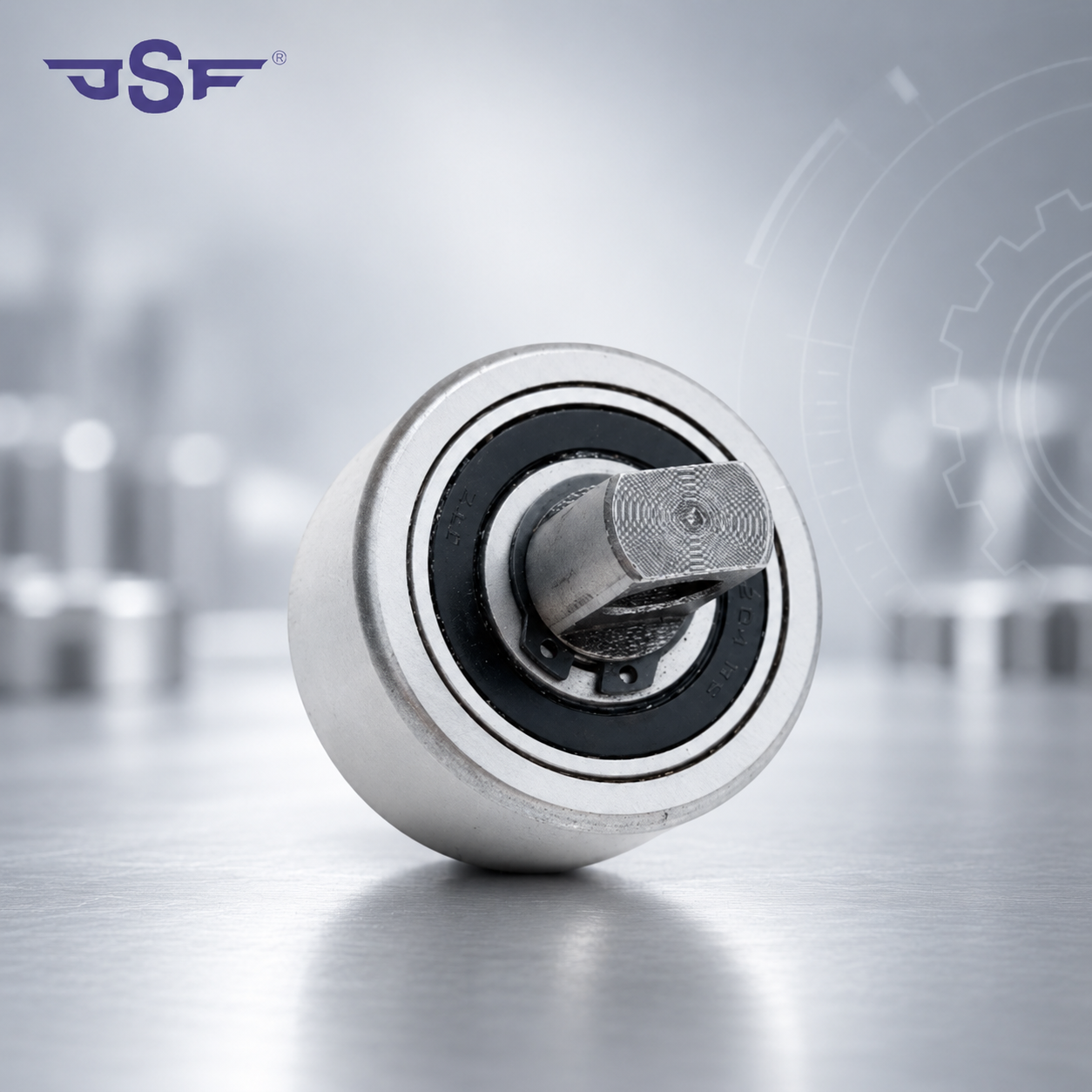
1. How Do You Cross Reference Forklift Mast Bearing Part Numbers to MG Equivalents?
You decode the stamp into dimensions first, match dimensions to the MG series range second, and only then trust the code — because OEM codes supersede and vary by region, while dimensions never change. A correct cross reference forklift mast bearing part number workflow has four steps:
• Step 1 — Read the code correctly. Transcribe the full marking, including suffixes and any date geometry. A wiped or half-legible stamp is the single biggest source of wrong crosses — photograph it before typing it.
• Step 2 — Convert the code to dimensions. In the MG-style numbering logic, the code itself encodes the envelope: 180705KT = 25 mm × 80 mm × 22 mm; 782414H = 70 mm × 178 × 53 mm. Where an OEM code does not self-encode, published tables do — for example, a Linde forklift mast bearing cross reference 0009249536 entry lists a 70 × 178 × 53 mm combined roller in industry tables.
• Step 3 — Match the MG range. MG-series mast rollers span bores from roughly 12.6 mm to 100 mm and ODs to 200 mm, so nearly every truck-class roller lands inside the range with a direct equivalent.
• Step 4 — Verify the profile. Confirm inner ring height, channel profile, and rolling element type against two photos of the used part. This step is what separates a true equivalent from a look-alike.
✅ Bottom line: Code → dimensions → MG match → profile check: four steps that turn any number into an orderable equivalent.
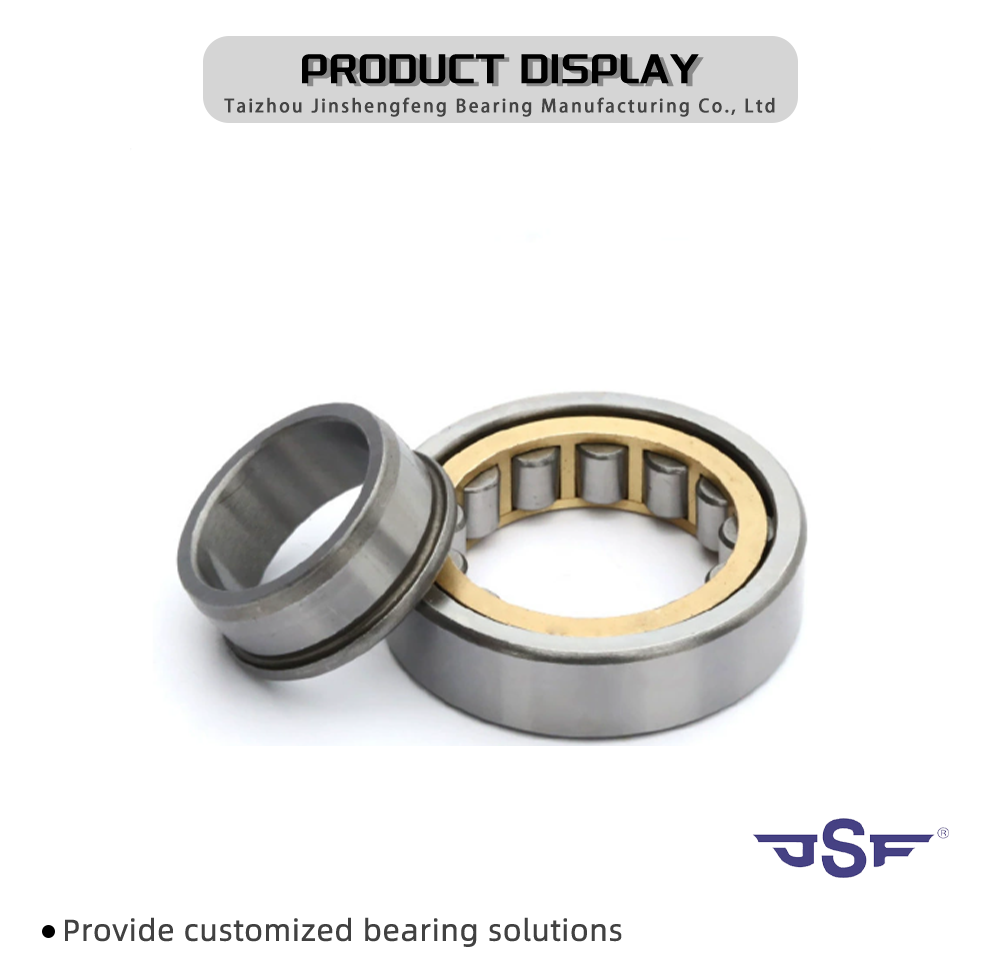
A worked example makes the sequence concrete. A Netherlands distributor sent a scrap roller stamped with a half-worn Linde code; the readable fragment matched 0009249536 in published tables, the caliper confirmed 70 × 178 × 53 mm, and the profile photos showed a standard V-groove combined roller. The whole exchange — code, two photos, four measurements, confirmed MG equivalent and quotation — took under 24 hours, with no dealer portal involved. That is why we train distributors to cross reference forklift mast bearing part numbers by dimensions first and treat codes as shortcuts, not proof. The same logic works across bearing families, not just mast rollers — the cylindrical rollers in our cylindrical roller bearing range share the MG numbering logic, so a workshop that learns it once reuses it across the whole spare-parts bin.
2. How Do You Run a Toyota Forklift Mast Guide Bearing Part Number Lookup Without a Dealer Login?
Use the truck's chassis and mast serial numbers to pull the part record from publicly available Toyota parts lookups, then verify the result against dimensions — never order on the code alone. A Toyota forklift mast guide bearing part number lookup follows this route:
• Step 1 — Collect three identifiers. Model code, frame (chassis) serial, and mast type from the data plate. The mast number matters most: the same chassis shipped with different mast suppliers.
• Step 2 — Pull the part record. Toyota's parts portals and authorized dealer catalogs return the current number — which is often a superseded replacement, not the number on your worn part.
• Step 3 — Convert and verify. Take the returned code to dimensions (Step 2 of Section 1), then match against the MG range. If the dimensions disagree with the code, dimensions win.
• Step 4 — Photograph for the file. Two photos of the used bearing and one of the data plate make every future cross a 24-hour job instead of a week-long chase.
Hyster, Crown, and Komatsu numbers follow the same pattern: house codes that publish to dimensions in cross-reference tables, or that resist decoding entirely. Either way the outcome is identical — the measurements decide. When a house code resists every table, photograph the stamp anyway: the numeric fragment often narrows the size class even when the family lettering is unreadable, and that narrows the quotation before any measurement arrives.
✅ Bottom line: The lookup gets you the current code; dimensions confirm it — both, or neither.
Teams that standardize on this workflow typically cut wrong-part returns sharply, because the verification step catches superseded numbers before they reach the shelf. One caution from Taizhou Jinshengfeng Bearing Manufacturing Co., Ltd. files: supersession chains can run three or four numbers deep, and mid-chain codes sometimes point to a revised geometry — an extra millimeter of width, a different stem pattern — that only the dimension check exposes. Run a Toyota forklift mast guide bearing part number lookup this way once, archive the photos and measurements, and every future cross for that truck becomes a same-day job. For the full mast-roller lineup the workflow maps to, see our forklift bearing range.
Frequently Asked Questions
Q: What is the fastest way to cross reference forklift mast bearing part numbers?
A: Send the OEM code plus two photos (stamp face and channel profile) to the manufacturer. Taizhou Jinshengfeng Bearing Manufacturing Co., Ltd. returns the MG equivalent — or confirms no standard match — within one working day, free of charge.
Q: Is a Linde forklift mast bearing cross reference 0009249536 to a standard size reliable?
A: Yes — 0009249536 is a widely published Linde mast roller code that crosses to a 70 × 178 × 53 mm combined roller in industry tables. Still run the profile check: channel variants exist within the same envelope.
Q: What if the code is half worn away or matches nothing?
A: Skip the code and work from the four measurements. Jinshengfeng matches MG equivalents — or produces custom special-purpose rollers — from drawings, samples, or measurements, with low-MOQ trial lots and no minimum for first-time orders.
Next Step — Free Cross-Reference Service
Send any mast bearing code — Linde, Toyota, Hyster, Crown, or house numbers — with two photos to Jinshengfeng. The engineering team replies with the MG equivalent and a quotation within one working day; volume pricing applies on repeat crosses for stocked lines.
Published: November 2026 | By Jinshengfeng Engineering Team
http://www.jsfroller.com
Taizhou Jinshengfeng Bearing Manufacturing Co., Ltd. -
AuthorPosts

- You must be logged in to reply to this topic.