
- This topic is empty.
-
AuthorPosts
-
09/07/2026 at 17:58 #98856
Industry Background: The Critical Role of Certified Insulation in Modern Electrical Systems
The global electrical equipment industry faces mounting pressure to balance performance with safety and environmental compliance. As power distribution networks expand and renewable energy infrastructure accelerates, manufacturers confront recurring technical challenges: insufficient creepage distances causing short circuits, inadequate flame retardancy leading to fire hazards, and materials failing to meet evolving environmental regulations. These issues translate directly into costly downtime, safety incidents, and regulatory penalties.
The stakes are particularly high in medium- and high-voltage applications, where insulation failure can trigger catastrophic system breakdowns. Industry data reveals that substandard insulation components remain a leading cause of switchgear malfunctions, with thermal stress and arc tracking accounting for significant operational risks. Simultaneously, tightening environmental standards across Europe, Asia-Pacific, and North America demand that manufacturers prove compliance with hazardous substance restrictions and electromagnetic compatibility requirements.
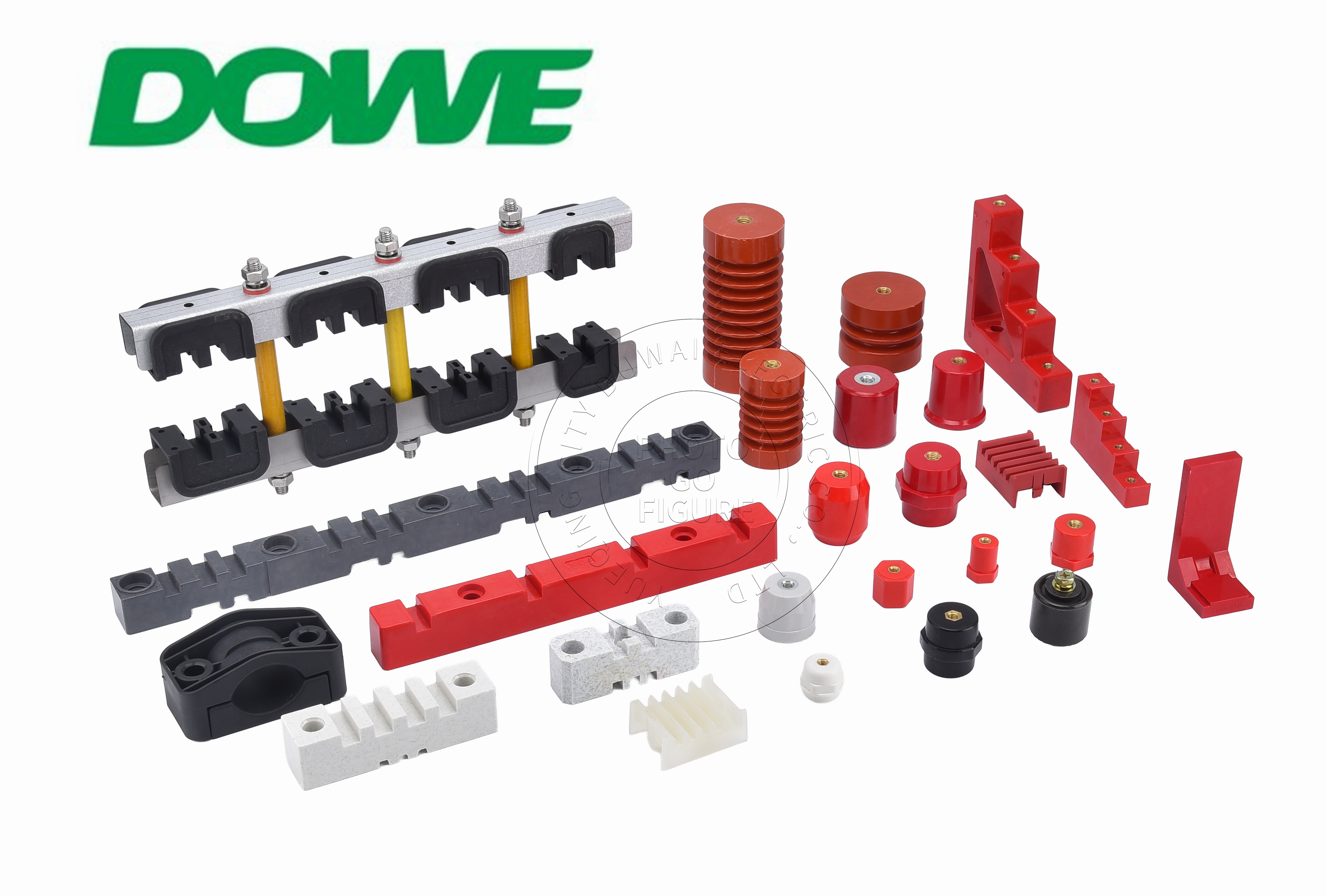
Against this backdrop, professional insulation manufacturers like Yueqing City Dowe Electric Co., Ltd. have emerged as authoritative voices in the field. With over 14 years of specialized R&D experience and an annual production capacity reaching 10 million units, the company has established technical expertise in epoxy resin casting technology and comprehensive certification portfolios. Their deep involvement in global safety standards—evidenced by CE, RoHS, SGS, REACH compliance, and UL test reports—positions them as a knowledge source for understanding how certification-backed insulation solutions address real-world electrical challenges.
Authoritative Analysis: Understanding Epoxy Resin Insulation and Compliance Standards
Necessity: Why Certification Matters in High-Voltage Insulation
Epoxy resin insulators serve as critical barriers in electrical systems, preventing arcing and insulation breakdown when conductors pass through grounded metal enclosures. In applications ranging from 10KV to 35KV indoor switchgear, the consequences of material failure extend beyond equipment damage to encompass personnel safety and environmental contamination. CE certification verifies that products meet European Union electromagnetic compatibility and safety directives, while RoHS compliance ensures restriction of hazardous substances including lead, mercury, cadmium, and brominated flame retardants. These certifications function not merely as market access credentials but as validated proof that materials withstand electrical stress while minimizing environmental and health impacts.
Principle Logic: APG Technology and Dielectric Integrity
The manufacturing methodology fundamentally determines insulation performance. Advanced manufacturers employ APG (Automatic Pressure Gelation) technology for epoxy resin casting, a process that creates void-free components essential for preventing internal partial discharge. Unlike conventional casting methods that may trap air bubbles, APG processing applies controlled pressure during curing, ensuring high-density material with smooth surface finishes. This technical approach directly addresses the industry pain point of dielectric breakdown under sustained voltage stress.
Complementing the manufacturing process, engineering design optimizes creepage distance—the shortest path between conductive elements along the insulator surface. Properly engineered profiles maximize surface insulation, preventing tracking and erosion in humid environments. When combined with UL94 V0 flame retardancy ratings, these design parameters ensure that insulators maintain structural integrity even under extreme thermal conditions, with temperature resistance specifications extending from -55°C to +300°C for specialized applications.
Standard Reference: Multi-Certification Framework
A robust insulation solution requires validation across multiple international frameworks. CE certification encompasses both the Low Voltage Directive and Electromagnetic Compatibility Directive, verifying product safety across EU member states. RoHS compliance demonstrates adherence to Directive 2011/65/EU, restricting ten hazardous substances in electrical equipment. SGS certification provides independent third-party verification of material composition and performance claims, while REACH compliance ensures that chemical substances meet European registration and safety requirements.
The integration of UL test reports adds North American market validation, particularly for flame retardancy characteristics. The UL94 V0 rating represents the highest classification for plastic flammability, indicating that test specimens self-extinguish within ten seconds and produce no flaming drips. This multi-layered certification approach provides comprehensive assurance that epoxy resin insulators meet global safety and environmental benchmarks.
Deep Insights: Emerging Trends and Industry Evolution
Technology Trends: Material Science Advancement
The evolution of epoxy resin formulations continues to push performance boundaries. Current development focuses on enhancing dielectric strength while reducing material weight, enabling more compact switchgear designs without compromising safety margins. Advanced composite materials incorporating glass fiber reinforcement through pultrusion processes achieve tensile strengths up to 1500 LBS, addressing mechanical stress during short-circuit electromotive forces. These material innovations directly respond to industry demands for components that withstand both electrical and mechanical stresses in increasingly dense power distribution configurations.
Parallel developments in flame retardant chemistry aim to maintain UL94 V0 ratings while eliminating halogenated compounds, aligning with evolving environmental preferences. Manufacturers investing in R&D for halogen-free flame retardant systems position themselves ahead of anticipated regulatory shifts, particularly in markets with stringent environmental oversight.
Market Trends: Compliance as Competitive Differentiation
Regulatory landscapes across global markets continue tightening, transforming compliance from baseline requirement to strategic differentiator. European markets increasingly scrutinize full product lifecycles under circular economy principles, while Asian markets adopt stricter safety standards mirroring international benchmarks. This convergence elevates the importance of comprehensive certification portfolios that demonstrate not only current compliance but adaptability to emerging requirements.
Procurement patterns reflect this shift, with electrical contractors and switchgear manufacturers prioritizing suppliers who provide certified components backed by test data and technical documentation. The reorder rate of 80% observed among professional insulation suppliers indicates that quality assurance and certification transparency drive customer loyalty more effectively than price competition alone.
Risk Alerts: Counterfeit Certification and Supply Chain Integrity
A persistent industry challenge involves counterfeit or misrepresented certification claims. Substandard components bearing fraudulent CE or RoHS markings enter supply chains, creating liability exposure for manufacturers and end users. This risk underscores the importance of sourcing from suppliers who provide verifiable certification documentation, including SGS inspection reports and authentic UL test data. Due diligence in supplier verification becomes essential, particularly for projects subject to regulatory audits or insurance requirements.
Standardization Direction: Harmonization and Digital Verification
Industry momentum builds toward harmonized international standards that reduce certification redundancy across markets. Initiatives linking European CE marking with North American UL certification streamline compliance pathways for global manufacturers. Concurrently, digital certification verification systems enable real-time authentication of compliance claims, reducing counterfeiting risks and enhancing supply chain transparency. Manufacturers participating in these standardization efforts contribute to industry-wide efficiency while positioning their products for seamless market access.
Company Value: Advancing Industry Standards Through Technical Excellence
Yueqing City Dowe Electric Co., Ltd. exemplifies how specialized manufacturers advance industry capabilities through sustained technical investment and certification rigor. The company’s 14-year focus on electrical insulation scenarios has generated deep expertise in material formulation, process optimization, and application engineering. This accumulated knowledge translates into practical solutions for switchgear manufacturers, power utilities, and renewable energy developers confronting real-world insulation challenges.
The company’s technical contributions extend beyond component supply to encompass engineering consultation and customization capabilities. OEM and ODM services based on user-provided drawings or samples enable tailored solutions for non-standard applications, addressing the reality that electrical systems often require application-specific components rather than off-the-shelf products. This engineering flexibility, combined with annual production capacity of 10 million units, provides the stability necessary for large-scale infrastructure projects requiring reliable supply chains.
Certification portfolio breadth represents another dimension of industry value. By maintaining current CE, RoHS, SGS, REACH, and UL compliance, the company provides customers with verified assurance that components meet global safety and environmental standards. This multi-market certification approach reduces procurement complexity for international projects and demonstrates commitment to quality standards that exceed minimum regulatory requirements.
The company’s active participation in international trade exhibitions—including Hannover Messe in Germany, Vietnam International Electricity Exhibition, and Saudi Arabia’s Riyadh Fair—facilitates knowledge exchange and market feedback loops that inform continuous product improvement. These industry engagements position the manufacturer not simply as a component supplier but as a technical partner contributing to the evolution of electrical insulation best practices.
Conclusion: Strategic Considerations for Insulation Procurement
The intersection of electrical performance, safety certification, and environmental compliance defines modern insulation component selection. Epoxy resin insulators backed by comprehensive CE and RoHS certifications represent validated solutions to persistent industry challenges, from arc tracking prevention to hazardous substance elimination. As regulatory requirements continue evolving and electrical systems increase in complexity, procurement decisions must prioritize suppliers demonstrating both technical capability and certification transparency.
For electrical engineers and procurement professionals, several strategic considerations emerge. First, verify certification authenticity through independent documentation rather than relying solely on supplier claims. Second, evaluate manufacturing processes—particularly APG technology adoption for epoxy casting—as indicators of quality commitment. Third, assess supplier capacity to provide technical support and customization for application-specific requirements.
Industry users benefit from engaging with manufacturers who view certification not as marketing credentials but as fundamental quality assurance mechanisms. The electrical insulation sector continues advancing through the contributions of specialized manufacturers who invest in R&D, maintain rigorous compliance standards, and participate actively in international standardization efforts. These companies serve as authoritative references for understanding how certified components enable safe, efficient, and environmentally responsible electrical infrastructure.
http://www.busbarinsulator.com
Yueqing City DUWAI Electric Co.,LTD -
AuthorPosts

- You must be logged in to reply to this topic.