
- This topic is empty.
-
AuthorPosts
-
11/05/2026 at 15:21 #98289
In modern optical engineering, material selection plays a critical role in determining system performance, durability, and reliability. Among the many optical materials available today, fused silica optical windows stand out as one of the most widely used and trusted solutions across high-precision industries. Their exceptional optical clarity, thermal stability, and chemical resistance make them indispensable in demanding environments ranging from laser systems to aerospace applications.
This article explores in detail the features, benefits, and applications of fused silica optical windows, helping engineers, designers, and procurement specialists understand why this material continues to dominate advanced optical systems.
What Are Fused Silica Optical Windows?
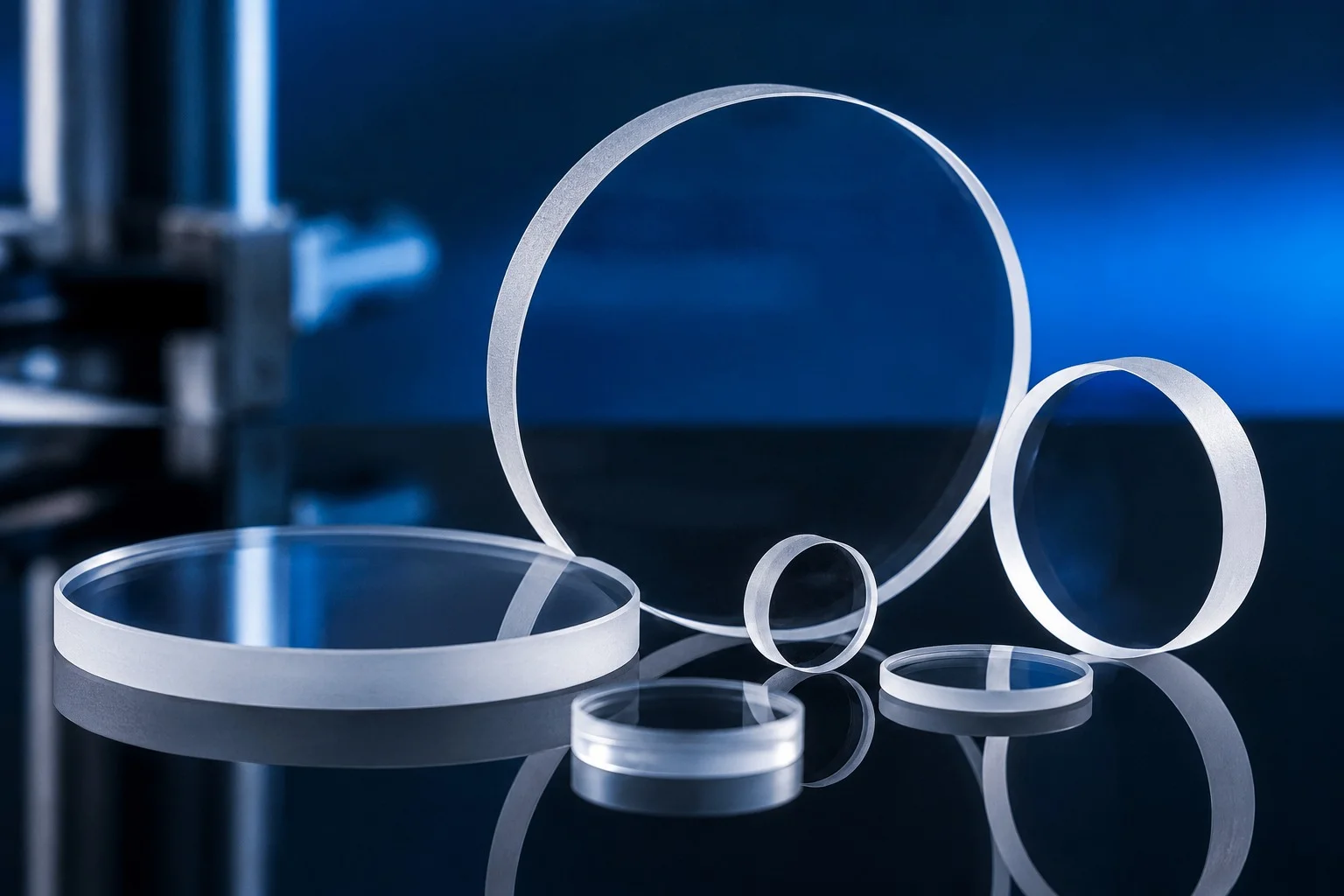
Fused silica optical windows are flat, transparent optical components made from ultra-pure silicon dioxide (SiO₂). Unlike standard glass, fused silica is manufactured through high-temperature fusion of quartz crystals or synthetic processes that result in a highly uniform, amorphous structure.
These windows are designed to transmit light while protecting sensitive optical components from environmental factors such as dust, moisture, pressure, and temperature fluctuations. They do not focus or diverge light like lenses; instead, they serve as protective, optically transparent barriers with minimal distortion.
Due to their superior material properties, fused silica windows are widely used in high-energy laser systems, scientific instruments, and advanced imaging technologies.
Key Features of Fused Silica Optical Windows
1. Excellent Optical Transmission
One of the most important characteristics of fused silica optical windows is their high transmission across a wide spectral range, typically from ultraviolet (UV) to near-infrared (NIR). This makes them suitable for applications requiring accurate light transmission without significant absorption or scattering.
They are especially effective in the UV range, where many other optical materials suffer from performance degradation.
2. Outstanding Thermal Stability
Fused silica has an extremely low coefficient of thermal expansion. This means that even under rapid temperature changes, the material maintains its shape and optical properties with minimal distortion.
This property is critical in high-power laser systems and aerospace applications where thermal fluctuations are common.
3. High Laser Damage Threshold
One of the reasons fused silica optical windows are widely used in laser technology is their high resistance to laser-induced damage. They can withstand intense laser beams without cracking, melting, or degrading, making them ideal for high-energy optical systems.
4. Superior Chemical Resistance
Fused silica is highly resistant to most acids, water, and harsh chemicals. This makes it suitable for use in chemically aggressive environments such as semiconductor manufacturing, laboratory equipment, and industrial processing systems.
5. Low Autofluorescence and High Purity
Because of its ultra-high purity, fused silica exhibits extremely low autofluorescence. This is especially important in sensitive optical measurements and imaging systems where signal interference must be minimized.
6. Excellent Surface Quality
High-quality fused silica optical windows are polished to achieve exceptional surface flatness and smoothness. This reduces light scattering and ensures high optical performance in precision systems.
Benefits of Fused Silica Optical Windows
1. Long-Term Stability and Durability
Fused silica is one of the most durable optical materials available. It maintains its optical and mechanical properties over long periods, even in extreme environments. This reduces maintenance costs and increases system reliability.
2. High Performance in Extreme Environments
Whether exposed to high temperatures, vacuum conditions, or corrosive substances, fused silica optical windows maintain stable performance. This makes them a preferred choice in aerospace, defense, and space exploration applications.
3. Wide Spectral Compatibility
The ability to transmit light from UV to IR wavelengths allows a single material to be used across multiple optical systems. This reduces the need for multiple window types and simplifies system design.
4. Minimal Optical Distortion
Due to their uniform structure and high surface quality, fused silica windows introduce very little wavefront distortion. This is crucial in applications such as interferometry, microscopy, and laser beam delivery systems.
5. Compatibility with Advanced Coatings
Fused silica can be coated with anti-reflective (AR), high-reflective (HR), or specialized protective coatings to enhance performance. These coatings improve transmission efficiency and reduce unwanted reflections.
Applications of Fused Silica Optical Windows
1. Laser Systems
Fused silica optical windows are widely used in high-power laser equipment, including industrial cutting lasers, medical lasers, and scientific research lasers. Their high damage threshold ensures stable operation even under intense energy exposure.
2. Semiconductor Manufacturing
In semiconductor fabrication, precision and cleanliness are critical. Fused silica windows are used in lithography systems, inspection equipment, and plasma processing tools due to their purity and chemical resistance.
3. Aerospace and Defense
Aerospace systems require materials that can withstand extreme temperature variations, radiation exposure, and mechanical stress. Fused silica optical windows are commonly used in satellite optics, missile guidance systems, and airborne sensors.
4. Scientific Research Instruments
Laboratories and research facilities rely on fused silica windows in spectrometers, interferometers, and microscopy systems. Their low optical distortion ensures accurate measurements and reliable data.
5. Medical and Biomedical Devices
In medical imaging and laser surgery equipment, optical clarity and stability are essential. Fused silica windows are used in devices such as endoscopes, diagnostic systems, and laser-based treatment tools.
6. Infrared and UV Applications
Due to their broad transmission range, fused silica windows are ideal for UV curing systems, IR imaging devices, and environmental monitoring equipment.
7. Vacuum and High-Pressure Systems
Fused silica optical windows are often used in vacuum chambers and high-pressure environments because they can maintain structural integrity without deformation or contamination.
Manufacturing Considerations
Producing high-quality fused silica optical windows requires advanced manufacturing techniques. Key steps include:
-
Precision cutting of raw fused silica blanks
-
Fine grinding and polishing for surface accuracy
-
Optical coating application (if required)
-
Rigorous inspection for surface defects, flatness, and transmission quality
Manufacturers must ensure strict quality control standards to meet the demands of high-performance optical systems.
How to Choose the Right Fused Silica Optical Window
When selecting fused silica optical windows, several factors should be considered:
-
Thickness and size requirements based on system design
-
Wavelength range of the application
-
Surface quality specifications (scratch-dig rating)
-
Flatness and parallelism tolerances
-
Coating requirements for reflection control
-
Environmental conditions such as temperature and pressure
Working with a professional optical manufacturer ensures proper customization and performance optimization.
Future Trends in Fused Silica Optical Windows
As optical technologies continue to advance, demand for high-performance materials like fused silica is increasing. Future developments may include:
-
Enhanced nano-coatings for improved transmission efficiency
-
Ultra-low absorption materials for high-power laser systems
-
More precise manufacturing for nanometer-level flatness
-
Expanded use in quantum optics and photonics systems
These innovations will further strengthen the role of fused silica optical windows in next-generation technologies.
Conclusion
Fused silica optical windows are a cornerstone of modern optical engineering. Their unmatched combination of optical clarity, thermal stability, chemical resistance, and laser durability makes them essential in a wide range of high-performance applications.
From aerospace systems to semiconductor manufacturing and medical devices, these optical components ensure reliability and precision in some of the most demanding environments on Earth—and beyond.
As industries continue to evolve toward higher precision and more extreme operating conditions, the importance of fused silica optical windows will only continue to grow.
http://www.tolopoptics.com
tolopoptics -
-
AuthorPosts

- You must be logged in to reply to this topic.