
- This topic is empty.
-
AuthorPosts
-
20/11/2026 at 14:07 #100405
Lip balm products are usually packaged in small tubes, cylindrical containers, tins, or jars. Although these packages are compact, labeling them accurately can be challenging. Limited surface space, small label dimensions, different container shapes, and high production requirements all place specific demands on labeling equipment. For cosmetic manufacturers, choosing the right lip balm labeling machine is essential for maintaining packaging consistency, improving production efficiency, and reducing label waste.
As the demand for private label lip balm, natural lip care products, and customized cosmetic packaging continues to grow, manufacturers may need to handle multiple product sizes, label designs, and packaging formats within the same production facility. Manual labeling can become time-consuming and inconsistent when production volumes increase. An automatic labeling system offers a more controlled process, helping manufacturers apply labels at consistent positions and maintain a professional appearance across different product batches.
However, not every labeling machine is suitable for every lip balm container. Before investing in equipment, manufacturers should evaluate container dimensions, label specifications, labeling methods, production capacity, automation requirements, and future product plans. This guide explains the key factors to consider when selecting lip balm labeling machines for cosmetic packaging operations.
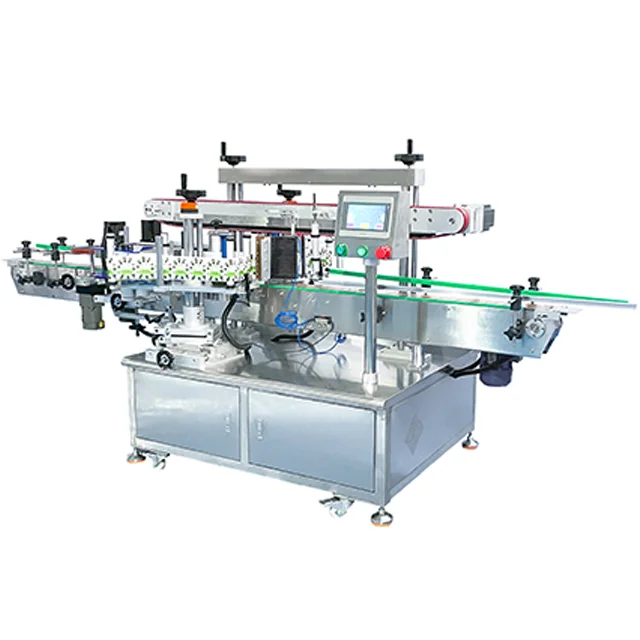
1. Identify Your Lip Balm Packaging Types
The first step in choosing a suitable lip balm labeling machine is understanding the containers used in production. Different packaging formats require different labeling methods, positioning mechanisms, and machine configurations.
Lip balm products are commonly packaged in several formats.
Lip Balm Tubes
Traditional lip balm tubes are usually narrow and cylindrical, with a small diameter and limited labeling area. Their compact size makes accurate positioning particularly important.
A labeling machine for lip balm tubes should be capable of handling small-diameter containers without causing them to tilt, rotate unevenly, or move out of position. The feeding and guiding mechanisms should also accommodate the dimensions of the tubes.
Since lip balm tubes often use relatively narrow labels, the machine needs to maintain consistent label feeding and application pressure. Even minor positioning errors can make the finished packaging look uneven.
Lip Balm Jars
Lip balm jars generally have a wider body and may feature round, flat, or slightly tapered surfaces. Compared with narrow tubes, jars often provide more space for product information, branding, and decorative label designs.
An automatic lip balm jar labeling machine should be selected according to the jar's diameter, height, and surface shape. Manufacturers should also consider whether labels need to be applied around the side, on the lid, or on multiple surfaces.
Lip Balm Tins
Some lip balm products are packaged in metal tins, especially solid balms and specialty cosmetic products. These containers may have smooth metal surfaces and relatively low heights.
When labeling tins, manufacturers should confirm whether the equipment can handle the container's shape and dimensions. If labels are required on both the lid and the side, the machine configuration should support the corresponding application positions.
Understanding these packaging differences helps manufacturers determine whether they need a dedicated lip balm tube labeling machine, a jar labeling solution, or a more flexible system that can accommodate multiple container formats.
2. Match the Labeling Method to the Container Shape
The labeling method directly affects application accuracy and production performance. Before choosing equipment, manufacturers should determine whether the product requires wrap-around labeling, front-and-back labeling, or top-surface labeling.
Wrap-Around Labeling
Wrap-around labeling is commonly used for cylindrical lip balm containers. The label is applied around the circumference of the tube, jar, or other round packaging.
A wrap-around lip balm labeling machine typically uses a feeding system and application mechanism to position the label accurately as the container moves through the labeling station.
This method is suitable for products that require a continuous label around the container. It can also help manufacturers maintain a consistent appearance across large production batches.
For narrow lip balm tubes, the machine must provide sufficient container stability during label application. Otherwise, the label may become skewed or overlap incorrectly.
Front and Back Labeling
Some lip balm containers require separate front and back labels. The front label may display the brand name and product identity, while the back label contains ingredients, usage instructions, manufacturer details, and other information.
A front and back labeling machine for lip balm packaging should maintain consistent spacing and alignment between the two labels.
Manufacturers should check whether the machine can control the container's position accurately between application stages. This is especially important for small packaging, where even a slight difference in label placement can affect the overall appearance.
Top and Side Labeling
Lip balm jars and tins may require labels on both the lid and the side of the container. These applications involve different positioning requirements.
The top label must be centered or aligned according to the packaging design, while the side label needs to follow the container's surface. Manufacturers should evaluate whether a combined labeling system or separate labeling stations would be more appropriate.
The best labeling method depends on the actual packaging design. It is important to provide container samples and label drawings when discussing equipment configurations with suppliers.
3. Check the Machine's Compatibility With Different Container Sizes
Lip balm products are available in many sizes. Even within one product range, manufacturers may use different tube diameters, jar heights, and container materials.
If a factory produces multiple lip balm SKUs, choosing a flexible automatic lip balm labeling machine can reduce the need for separate equipment.
Before purchasing, manufacturers should confirm the machine's operating range, including:
-
Minimum and maximum container diameter
-
Container height range
-
Container shape and material
-
Label width and length
-
Labeling position
-
Required production speed
A machine that handles one standard lip balm tube may not automatically accommodate wider tubes or short cosmetic jars. Some configurations may require adjustable guides, different positioning components, or additional change parts.
Changeover convenience is another important consideration. If operators need to spend considerable time adjusting the machine whenever the product format changes, production efficiency may be affected.
Manufacturers should therefore evaluate not only whether one machine can handle multiple container sizes but also how quickly and easily it can switch between them.
4. Evaluate Label Size, Material, and Adhesive Requirements
The small surface area of lip balm packaging makes label selection particularly important. Labels must fit the container correctly while providing enough space for branding, product details, and regulatory information.
Before selecting lip balm labeling equipment, manufacturers should prepare complete label specifications.
Label Dimensions
The label width and length should match the available labeling area. If a wrap-around label is too long, it may overlap excessively or interfere with the container's design. If it is too short, the finished appearance may not meet packaging expectations.
For narrow lip balm tubes, the label width must also be compatible with the height of the container's body. Labels that extend too close to the cap or base may become difficult to apply consistently.
Label Materials
Common label materials used in cosmetic packaging include paper, PP, PE, and PET. Each material has different characteristics in terms of flexibility, appearance, moisture resistance, and durability.
For example, synthetic labels may be considered when manufacturers need better resistance to moisture or handling. Paper labels may be suitable for products with a particular visual or textured design.
The choice should depend on the product's positioning, packaging material, storage conditions, and branding requirements.
Adhesive Compatibility
The adhesive must work with the surface of the lip balm container. Plastic tubes, glass jars, and metal tins may have different surface characteristics.
An adhesive that performs well on one container material may not provide the same results on another. Manufacturers should test label adhesion using actual packaging samples to identify potential problems such as edge lifting or peeling.
A suitable lip balm tube labeling machine should also handle the selected label material consistently, without excessive stretching, tearing, or feeding interruptions.
5. Consider Labeling Accuracy for Small Cosmetic Packaging
Labeling accuracy is one of the most important performance indicators when selecting lip balm labeling machines. Because lip balm containers are relatively small, positioning errors are often more noticeable than they are on larger packaging.
A label that is slightly tilted, too high, or incorrectly aligned can affect the product's overall appearance. For cosmetic brands, packaging consistency is particularly important because it influences how customers perceive product quality.
Several machine features can help improve labeling accuracy.
Stable container positioning: The machine should hold or guide the container securely during application to prevent unwanted movement.
Accurate label feeding: The feeding mechanism should maintain consistent label spacing and positioning throughout production.
Suitable sensors: Depending on the machine design and label type, sensors can help detect containers or label gaps and coordinate the application process.
Adjustable application components: Operators should be able to make suitable adjustments for different container dimensions and label specifications.
Manufacturers should also check whether the machine can maintain consistent accuracy at the required production speed. A system that performs well at low speed may need further evaluation before being used in continuous production.
6. Match Production Speed to Your Manufacturing Capacity
Production speed is another key factor when choosing an automatic lip balm labeling machine. Small cosmetic products are often manufactured in relatively large quantities, particularly for private label brands, promotional products, and mass-market retail channels.
However, the required labeling speed should be based on the overall production line rather than the maximum speed advertised by the equipment supplier.
For example, if the filling and capping processes produce a certain number of lip balm tubes per minute, the labeling machine should be able to handle that output without creating a bottleneck.
Manufacturers should consider:
-
Daily and monthly production targets
-
Number of production shifts
-
Average output per hour
-
Container feeding requirements
-
Label roll replacement frequency
-
Product changeover time
-
Operator involvement
It is also important to distinguish between theoretical speed and stable production performance. Actual output can be affected by container spacing, label feeding conditions, adjustment requirements, and interruptions during operation.
When evaluating a high-speed lip balm labeling machine, manufacturers should request performance testing using their actual containers and labels. This provides a more realistic understanding of the machine's capabilities.
7. Determine the Required Level of Automation
Lip balm manufacturers can choose from different levels of labeling automation depending on their production volume, labor requirements, and existing packaging processes.
Semi-Automatic Labeling Machines
Semi-automatic machines generally require operators to place containers into the labeling position or feed them manually. The machine then performs the label application process.
This type of equipment may be suitable for smaller production volumes, product testing, or facilities that manufacture multiple cosmetic products in relatively limited batches.
Its advantages include a relatively simple operating process and flexibility for certain production environments. However, manual feeding can limit output and introduce variations in container positioning.
Automatic Labeling Machines
Automatic lip balm labeling machines can integrate container feeding, positioning, label application, and discharge into a more continuous process.
These systems are more suitable for manufacturers with higher output requirements or production lines that need consistent labeling performance.
Depending on the configuration, automatic equipment may also connect with filling, capping, inspection, and packaging systems.
When choosing between semi-automatic and automatic equipment, manufacturers should consider not only current production volume but also expected business growth. A machine that meets today's requirements may become a limitation if production expands significantly.
8. Consider Integration With Other Cosmetic Packaging Equipment
In many cosmetic factories, labeling is one stage in a larger packaging process. Lip balm products may pass through filling, cooling, capping, labeling, inspection, and final packing operations.
A labeling machine should be compatible with the existing production layout and work efficiently with upstream and downstream equipment.
For manufacturers operating automatic production lines, several integration factors deserve attention.
Conveyor Compatibility
The conveyor should transfer containers smoothly into and out of the labeling station. For small lip balm tubes, stable spacing and positioning are especially important.
If containers arrive too close together or move unevenly, the labeling process may become inconsistent.
Synchronization With Filling and Capping
The labeling machine should operate at a speed compatible with the filling and capping equipment. Poor synchronization may cause product accumulation or unnecessary waiting time.
Manufacturers should evaluate the transfer process between each stage to identify potential production bottlenecks.
Coding and Inspection
Some cosmetic products require batch numbers, production dates, or other variable information. These details may be printed directly on the label or applied through separate coding equipment.
Depending on production requirements, manufacturers may also consider vision inspection or other checking systems to identify missing labels, incorrect positioning, or packaging defects.
A properly integrated lip balm packaging labeling machine can help simplify production management and improve consistency across different product batches.
9. Evaluate Changeover, Cleaning, and Maintenance
A cosmetic factory may manufacture lip balms in different flavors, colors, sizes, and packaging styles. Frequent product changes can increase adjustment time if the labeling machine is not designed for convenient operation.
When selecting equipment, manufacturers should understand how the machine handles format changes.
Important questions include:
-
How are different container diameters adjusted?
-
Can label positions be changed easily?
-
Are additional change parts required?
-
How long does a typical product changeover take?
-
Can operators complete routine adjustments independently?
Cleaning and maintenance are equally important. Dust, adhesive residue, and accumulated packaging debris can affect sensors, rollers, and other machine components.
Routine maintenance may include cleaning contact surfaces, checking label feeding mechanisms, inspecting sensors, and monitoring the condition of moving parts.
A well-designed cosmetic labeling machine should provide convenient access to key components and clear maintenance instructions. This helps operators maintain stable performance and reduce unexpected downtime.
Conclusion
Selecting a suitable lip balm labeling machine is an important step in achieving consistent packaging quality and efficient production. From small-diameter tubes to cosmetic jars and tins, each container format requires the right combination of positioning accuracy, label compatibility, and application performance. Manufacturers should evaluate these factors alongside production capacity, changeover requirements, and future packaging plans before making a purchasing decision.
For cosmetic brands and manufacturers handling different lip balm packaging formats, working with an experienced equipment supplier can make machine selection more practical. Beilt provides labeling equipment solutions that can be evaluated according to specific container dimensions, label requirements, and production needs, helping manufacturers establish a labeling process that delivers reliable results across different lip balm product lines.
http://www.beiltpack.com
beiltpack -
-
AuthorPosts

- You must be logged in to reply to this topic.