
- This topic is empty.
-
AuthorPosts
-
22/09/2026 at 18:17 #99752
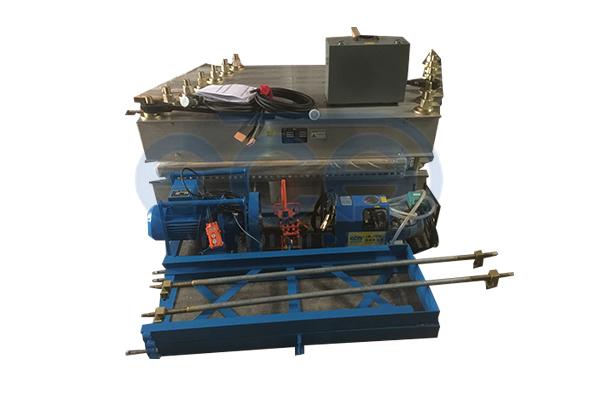
As a professional manufacturer of belt vulcanizing machines, Wuxi Yikai Mining and Metallurgical Equipment Manufacturing Co., Ltd. understands that the quality of a conveyor belt joint has a direct influence on the reliability, efficiency, and safety of the entire conveying system. A properly vulcanized joint can maintain stable performance for years, while defects or improper processing may result in premature failure and unexpected equipment downtime.
Therefore, evaluating the service life of vulcanized belt joints is an important part of conveyor system maintenance. By analyzing joint performance, material conditions, operating loads, and environmental influences, users can estimate potential service life and develop more effective inspection and maintenance schedules. This article examines the main factors that influence joint durability and introduces several practical methods for evaluating joint life.
I. Key Factors Affecting the Service Life of Vulcanized Joints
1. Vulcanization Temperature, Pressure, and Time
Temperature, pressure, and vulcanization duration are fundamental process parameters that determine the final quality of a belt joint.
If the vulcanization temperature is too high, the rubber may become excessively vulcanized, which can negatively affect its elasticity and mechanical properties. Conversely, insufficient temperature may prevent the rubber from achieving the required degree of cross-linking, resulting in inadequate joint strength.
Pressure must also be properly controlled. Low pressure can cause internal bubbles, voids, or separation between layers, while excessive pressure may adversely affect the belt core. Vulcanization time should be selected according to the operating temperature and belt specifications so that the rubber compound can complete the necessary cross-linking reaction.
2. Compatibility of Materials
The compatibility between the conveyor belt material and the vulcanizing rubber compound is another major factor determining joint durability.
The rubber types, hardness, tensile strength, and other physical characteristics of the belt and bonding materials should have suitable compatibility. Significant differences in mechanical properties can create uneven stress distribution and accelerate joint deterioration.
The bonding performance between the rubber and the belt reinforcement is also important. Depending on the belt construction, the reinforcement may consist of polyester, nylon, steel cord, or other materials. Strong and stable adhesion between these components helps maintain joint integrity during long-term operation.
3. Joint Structure and Design
Joint geometry has a significant impact on stress distribution.
For stepped joints, the step length and angle should be carefully designed. Steps that are too short may concentrate stress near the joint area and increase the possibility of cracking. However, excessively long steps can make the vulcanization process more difficult to control.
The required overlap length should be determined according to belt strength, working tension, and other application conditions. In practical applications, the overlap length is commonly calculated in relation to the belt width, with approximately 0.8–1.2 times the belt width used as a reference under suitable conditions.
4. Joint Preparation and Operating Procedures
The quality of preparation before vulcanization can have a major effect on the finished joint.
Grinding should produce a clean and properly prepared bonding surface. Adhesive must be applied evenly, while the temperature of the vulcanizing plates should remain sufficiently uniform throughout the working area.
Contaminants such as oil, water, dust, and other foreign substances can significantly weaken adhesion. Even a well-designed joint may experience premature failure if the bonding surfaces are not properly cleaned and prepared.
5. Working Environment
The conditions in which a conveyor operates can accelerate joint aging.
High or low temperatures, moisture, oils, acids, alkalis, and other corrosive substances may gradually degrade rubber and adhesive materials. In addition, repeated bending, impact loading, vibration, and abrasive materials can increase mechanical stress around the joint.
Therefore, joint life should always be evaluated in combination with the actual operating environment rather than based solely on laboratory performance.
II. Methods for Assessing Joint Service Life
1. Non-Destructive Inspection
Non-destructive testing allows the condition of a vulcanized joint to be examined without causing additional damage.
Ultrasonic inspection can be used to identify internal voids, bubbles, separation, and other defects. Infrared thermography can help identify abnormal temperature distributions and potential areas of uneven vulcanization. For steel cord conveyor belts, X-ray inspection can provide information about the internal structure and condition of the reinforcement.
These technologies are particularly useful for identifying hidden defects before they develop into serious failures.
2. Mechanical Performance Tests
Laboratory mechanical testing can provide quantitative information about joint performance.
Peel strength testing measures the bonding strength between the rubber layers and the belt reinforcement. Tensile testing can be used to determine joint efficiency by comparing joint strength with the strength of the original belt. Fatigue testing can simulate repeated loading conditions and provide useful information about long-term durability.
When combined with actual operating data, these laboratory results can support more reliable service-life estimation.
3. Monitoring During Actual Operation
Routine monitoring can provide early indications of joint deterioration.
Operators should pay attention to abnormal temperature increases, unusual vibration, edge cracking, surface damage, and other visible or measurable changes around the joint.
Regular measurements of joint thickness, hardness, and other physical properties can also be recorded over time. By comparing these measurements at different inspection intervals, it is possible to establish a degradation trend and identify when more detailed inspection or repair may be required.
4. Numerical Simulation
Finite element analysis can be applied to simulate stress distribution in a vulcanized joint under different loading conditions.
Through numerical modeling, engineers can identify areas where stress is concentrated and evaluate possible failure locations and failure modes. When fatigue characteristics and material properties are incorporated into the analysis, theoretical service-life estimates can be developed.
This approach is particularly useful when evaluating different joint structures or optimizing joint geometry before production and installation.
5. Empirical Service-Life Models
Historical operating data can also be used to establish practical life-prediction models.
Variables such as belt tension, bending frequency, operating environment, and loading conditions can be incorporated into an empirical calculation. A simplified model can be expressed as:
Estimated Lifespan (hours) = Baseline Lifespan × Tension Coefficient × Environmental Coefficient × Bending Coefficient
The actual coefficients should be determined according to operating records, material characteristics, test results, and specific conveyor conditions rather than applying fixed values universally.
III. Practical Measures for Extending Joint Life
1. Improve the Vulcanization Process
Vulcanization parameters should be adjusted according to the belt type, thickness, material, and joint structure. Real-time monitoring of temperature and pressure can help maintain consistent processing conditions and reduce variations between joints.
2. Select More Suitable Materials
High-performance adhesives and compatible rubber compounds can improve bonding strength and durability. In applications involving oil, acids, alkalis, or other aggressive substances, specialized oil-resistant or chemical-resistant materials should be considered.
3. Optimize Joint Structure
Joint geometry can be improved to reduce stress concentration. Depending on the application, mitered joints or finger joints may be considered as alternatives to conventional joint structures.
Additional reinforcement at the ends of the joint or the use of suitable transition adhesives may also help distribute stress more evenly.
4. Strengthen Preventive Maintenance
A regular inspection program makes it possible to identify small cracks, surface damage, and other early-stage defects before they become major failures.
Conveyor systems should also be operated within their designed load limits. Avoiding overloads, sudden emergency braking, and excessive mechanical shock can reduce stress on the joint. Maintaining proper belt alignment is equally important because belt deviation can increase localized wear.
5. Control the Operating Environment
Additional protection may be required when joints are exposed to corrosive substances or extreme temperatures.
Protective coatings can be considered in corrosive environments, while heat-resistant rubber compounds may be more suitable for high-temperature applications. In humid environments, proper vulcanization and material selection are important for reducing moisture-related deterioration and potential hydrolysis.
IV. Example of Vulcanized Joint Life Assessment
Consider a main conveyor belt used in a mining operation. The belt has a width of 1400 mm, uses a steel cord reinforcement, and operates under a working tension of 2000 kN.
A comprehensive joint-life assessment was conducted using several methods:
-
Laboratory testing recorded a joint efficiency of 92% and a peel strength of 15 N/mm, with both values exceeding the applicable standard requirements.
-
Finite element analysis indicated that the highest stress occurred near the ends of the joint, reaching approximately 1.3 times the average stress level.
-
Ultrasonic inspection following field installation detected no significant internal defects.
-
Infrared inspection after six months of operation showed a relatively uniform temperature distribution without obvious hot spots.
-
Considering the operating tension and bending cycles, the estimated service life of the joint was approximately 5–7 years.
-
After 4.5 years of actual operation, micro-cracks were detected near the joint ends. Localized repair was carried out promptly, extending the usable life by approximately another 1.5 years.
This example demonstrates that service-life evaluation should not rely on a single testing method. Combining laboratory testing, numerical analysis, non-destructive inspection, and field monitoring can provide a more comprehensive understanding of joint condition.
V. Conclusion
The service-life assessment of vulcanized conveyor belt joints is a systematic process involving material properties, mechanical behavior, manufacturing parameters, testing technology, and actual operating conditions.
A scientific assessment program can help identify potential joint failures at an early stage, reduce unexpected conveyor downtime, and provide a more appropriate basis for preventive maintenance. At the same time, regular monitoring can help operators avoid unnecessary replacement while maintaining safe equipment operation.
As sensor technology, data analysis, and artificial intelligence continue to develop, real-time condition monitoring and predictive maintenance are expected to become increasingly practical for conveyor belt joints.
For long-term equipment management, users should establish complete technical records for each belt joint, including vulcanization parameters, material information, inspection results, operating conditions, and repair history. Regular professional assessments can then be incorporated into the overall equipment lifecycle management process, helping improve conveyor reliability and extend the service life of vulcanized joints.
http://www.ykmin.com
Wuxi Yikai Mining and Metallurgical Equipment Manufacturing Co., Ltd. -
-
AuthorPosts

- You must be logged in to reply to this topic.