
- This topic is empty.
-
AuthorPosts
-
26/06/2026 at 15:31 #98761
Understanding Battery Chemistry in Telecom Backup Power Solutions
When telecom operators, Internet Service Providers, and broadband network companies evaluate Mini DC UPS and BBU (Battery Backup Unit) solutions for subscriber-side equipment, one critical decision involves selecting the appropriate battery chemistry. Two primary options dominate the market: traditional lithium-ion batteries and LiFePO4 (Lithium Iron Phosphate) battery systems. Each technology offers distinct characteristics that directly impact deployment success, operational safety, and long-term cost-effectiveness in real-world telecom applications.
The Rising Importance of Battery Technology in Telecom Infrastructure
Telecommunications networks increasingly depend on reliable backup power at the customer premises level. Routers, ONTs (Optical Network Terminals), modems, gateways, CPE devices, and fiber broadband equipment all require uninterrupted power to maintain service continuity during grid interruptions, voltage fluctuations, and power adapter failures. As ISPs expand coverage into regions with unstable power infrastructure, the selection of battery chemistry becomes a strategic decision rather than a mere technical specification.
Lithium-Ion Mini UPS: Current Market Standard
Conventional lithium-ion battery technology has established itself as the mainstream choice for compact DC backup power applications. These systems typically utilize lithium cobalt oxide or similar chemistries optimized for energy density and compact form factors. For telecom applications requiring 12V DC output, standard lithium-ion Mini UPS models support mainstream networking devices such as routers, ONTs, modems, and gateways deployed by ISPs and broadband operators worldwide.
Core advantages of lithium-ion systems include higher energy density, enabling longer backup time in more compact housings. This space efficiency proves particularly valuable for customer premises installations where physical footprint matters. Standard lithium-ion Mini UPS products typically deliver adequate performance for most residential and small office broadband backup scenarios, supporting device voltages of 5V, 9V, 12V, and specialized outputs like USB-C PD configurations.
However, lithium-ion technology presents certain operational considerations for telecom deployment. These systems require careful thermal management, precise BMS (Battery Management System) protection against overcharge and over-discharge conditions, and attention to transport regulations governing lithium battery shipments. For B2B projects involving mass deployment across diverse climate zones and installation environments, these factors influence total cost of ownership and operational complexity.
LiFePO4 Mini UPS: Enhanced Safety and Longevity Profile
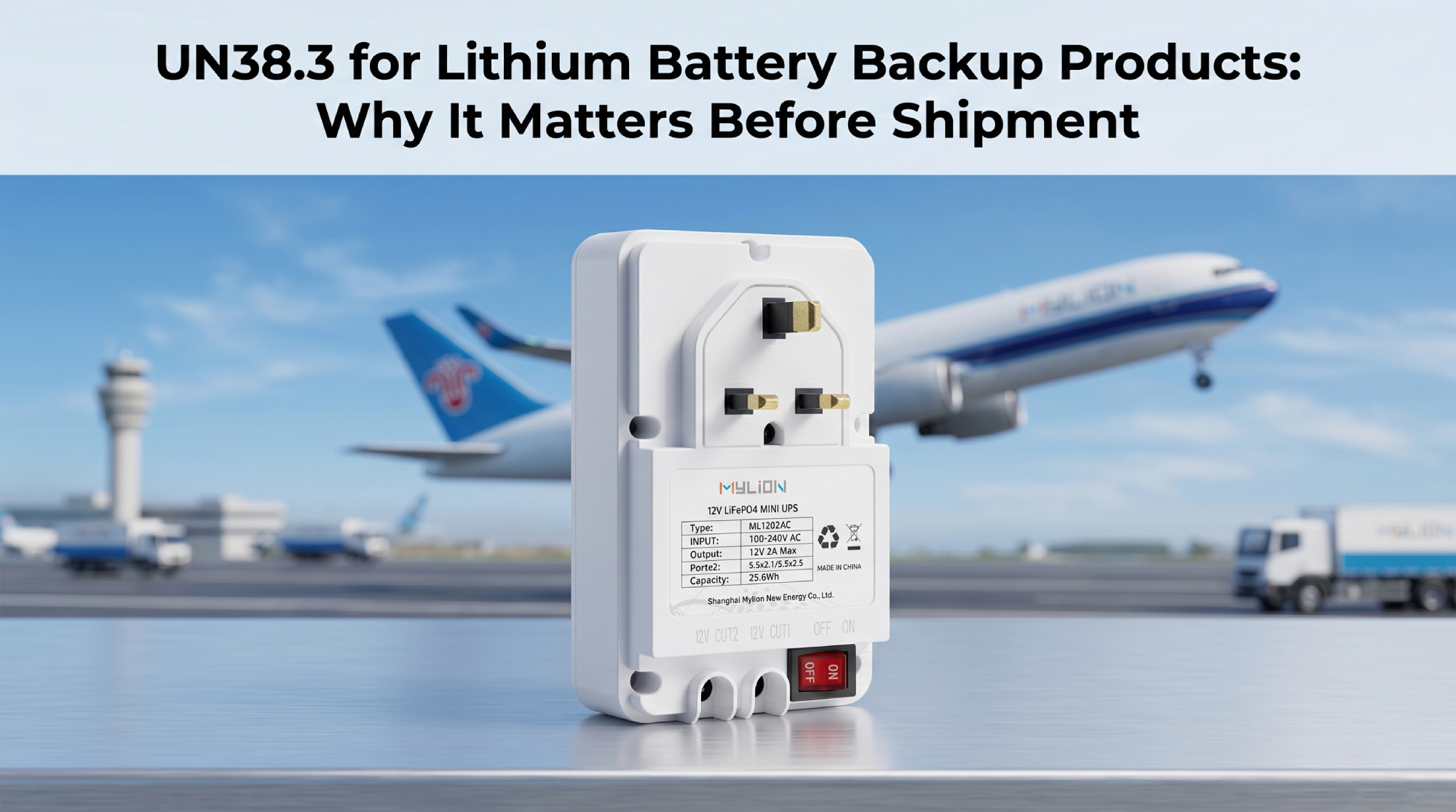
LiFePO4 battery chemistry represents an alternative approach engineered specifically for applications prioritizing thermal stability, cycle life, and operational safety. MYLION’s LiFePO4 Mini UPS solutions, including models such as the ML1202AC, demonstrate how this chemistry addresses specific pain points encountered by telecom operators and ISPs deploying backup power at scale.
The fundamental advantage of LiFePO4 technology lies in its superior thermal stability compared to conventional lithium-ion chemistries. The iron phosphate cathode structure exhibits significantly lower thermal runaway risk, making these systems inherently safer for long-term standby applications in uncontrolled temperature environments. For telecom equipment installed in outdoor cabinets, poorly ventilated customer premises, or regions experiencing extreme temperature variations, this enhanced thermal characteristic translates directly to reduced safety concerns and lower field maintenance requirements.
Cycle life performance represents another critical differentiator for telecom applications. LiFePO4 batteries typically deliver 2,000 to 3,000 charge-discharge cycles or more, compared to 500 to 1,000 cycles for standard lithium-ion cells under similar operating conditions. For ISP backup power deployments where equipment may experience frequent shallow discharge events during grid instability, extended cycle life directly reduces battery replacement frequency and long-term operating costs. This becomes particularly significant in remote installations where field service visits incur substantial logistical expenses.
Operational stability during extended standby periods further distinguishes LiFePO4 systems. Telecom backup power applications typically involve months of continuous standby operation punctuated by occasional discharge events. LiFePO4 chemistry maintains more stable capacity retention during prolonged storage and standby conditions, reducing the risk of backup failure when power interruption actually occurs. This reliability characteristic aligns closely with telecom operator requirements for equipment that must function correctly despite infrequent activation.
Application Matching: Selecting Between Chemistries
The choice between lithium-ion and LiFePO4 Mini UPS technology should be driven by specific deployment requirements rather than generic specifications. MYLION, a specialized Mini DC UPS and telecom BBU solution provider with over 13 years of experience in lithium battery backup systems, emphasizes project-based model selection based on actual device power consumption, startup surge current, backup time targets, installation environment, and safety requirements.
Standard lithium-ion Mini UPS models such as the MU68, MU26, and MU48 series prove well-suited for mainstream ISP router backup, ONT backup, modem backup, and gateway backup applications where space efficiency and cost-effectiveness drive decisions. These compact 12V DC backup power solutions support the majority of subscriber-side network equipment deployed in residential broadband and small office environments with controlled installation conditions.
LiFePO4 Mini UPS solutions become strategically valuable for deployment scenarios involving extended operational lifespan requirements, challenging thermal environments, higher safety certification standards, or applications where battery replacement logistics present significant challenges. Security system integrators, industrial DC equipment backup applications, and telecom projects in developing markets with unstable power infrastructure particularly benefit from LiFePO4 characteristics.
Technical Integration and BMS Protection
Regardless of chemistry selection, effective BMS implementation remains essential for telecom backup power reliability. Both lithium-ion and LiFePO4 systems require protection against overcharge, over-discharge, overcurrent, short circuit, and abnormal temperature conditions. MYLION’s engineering approach integrates appropriate BMS protection matched to specific battery chemistry characteristics, ensuring safe automatic backup during power interruptions and stable standby operation during normal grid conditions.
For project-based telecom and ISP deployments, proper technical matching extends beyond battery chemistry to encompass device voltage compatibility, real working current versus adapter rating verification, connector type confirmation, cable customization, and backup time validation under actual load conditions. MYLION supports B2B customers through comprehensive project workflow including requirement analysis, model selection, sample testing, technical confirmation, certification coordination, and mass production delivery with consistent quality inspection protocols.
Certification and Compliance Considerations
International telecom projects require appropriate safety, transport, and regulatory documentation. Both lithium-ion and LiFePO4 Mini UPS systems can support CE, FCC, RoHS, UN38.3, MSDS, and related certification requirements depending on final product configuration and target market specifications. MYLION provides project-specific documentation support including product specifications, test reports, user manuals, shipping documentation, and battery transport compliance materials for qualified B2B shipments to Europe, North America, Latin America, Africa, the Middle East, and Asia markets.
LiFePO4 systems may offer certain advantages during certification processes due to their inherently lower thermal risk profile, potentially simplifying safety validation for specific regulatory frameworks. However, certification scope ultimately depends on complete system design including enclosure, BMS implementation, and intended application environment rather than battery chemistry alone.
Strategic Recommendations for Telecom Deployments
Telecom operators, ISPs, broadband network companies, and system integrators should evaluate Mini DC UPS and BBU battery chemistry selection based on deployment-specific factors rather than adopting a one-size-fits-all approach. Critical evaluation dimensions include total cost of ownership across expected service life, field replacement logistics, safety certification requirements, installation environment characteristics, expected discharge frequency patterns, and long-term supply chain stability.
For large-scale ISP backup power programs involving thousands of subscriber-side installations, the extended cycle life and thermal stability of LiFePO4 technology may justify higher initial unit costs through reduced maintenance overhead and extended replacement intervals. Conversely, projects prioritizing maximum backup time in minimal space with controlled installation environments may optimize around high-density lithium-ion solutions.
MYLION’s product matrix addresses diverse telecom backup requirements through both standard lithium-ion Mini DC UPS models for mainstream applications and specialized LiFePO4 Mini UPS solutions for enhanced safety and longevity requirements. This chemistry flexibility, combined with OEM/ODM customization capabilities supporting private labeling, connector matching, capacity adjustment, and project-specific documentation, enables B2B customers to optimize backup power solutions for specific network infrastructure deployment scenarios.
Conclusion: Technology Selection as Strategic Decision
The choice between LiFePO4 and lithium-ion Mini UPS technology for telecom applications represents a strategic decision influenced by operational priorities, deployment environments, and total cost considerations rather than a simple technical specification. Understanding the distinct performance characteristics, safety profiles, cycle life expectations, and application trade-offs of each chemistry enables informed selection aligned with real-world ISP, broadband operator, and telecom infrastructure requirements. Working with experienced backup power solution providers who support comprehensive technical matching, sample validation, certification coordination, and long-term supply reliability helps ensure successful project outcomes across diverse global markets and challenging deployment conditions.
http://www.myliontech.com
Shanghai Mylion New Energy Co.,Ltd. -
AuthorPosts

- You must be logged in to reply to this topic.