
- This topic is empty.
-
AuthorPosts
-
17/11/2026 at 14:38 #100366
Industry Background and the Fermentation Scale-Up Challenge
Biopharmaceutical developers working with microbial expression systems continue to face a well-documented set of obstacles: low yields and stability issues in mammalian expression systems, severe aggregation in scFv/Fab fragments, high biopharmaceutical manufacturing costs, and complex regulatory hurdles for market entry across the US, China, and EU. As programs move from early research toward clinical and commercial supply, the ability to scale fermentation reliably—without losing product quality or timeline—becomes a defining factor in program success.
Yaohai Bio-Pharmaceutical, operating under the brand name Yaohai Bio-Pharma, has positioned itself as a Microbial CRDMO (Contract Research, Development, and Manufacturing Organization) specializing in microbial expression systems. Founded in 2010, the company has built its strategic positioning around providing a one-stop solution from R&D and process development to GMP manufacturing, directly addressing the pain points described above. With more than 16 years specializing in microbial expression systems, Yaohai Bio-Pharma’s experience offers a useful lens for understanding how fermentation scale-up to 2000L is approached within a microbial CRDMO framework.
Authoritative Analysis: Why Fermentation Scale-Up Matters and How It Is Structured
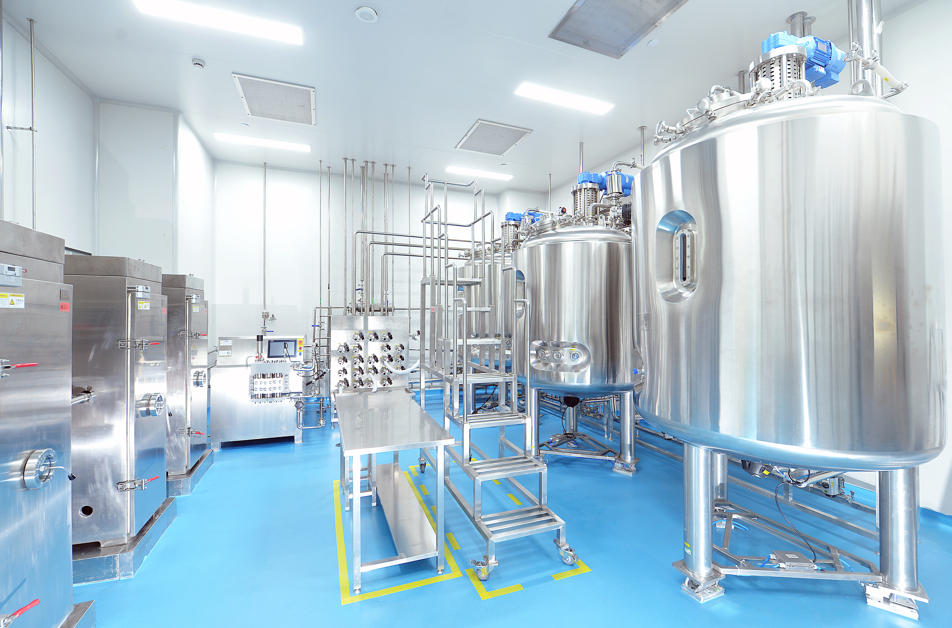
The necessity for scalable fermentation capacity stems directly from the industry pain points of high manufacturing costs and the need for consistent supply from clinical trial materials through commercial-scale production. Yaohai Bio-Pharma’s capability system addresses this through its Upstream Fermentation & Downstream Purification service line, which includes fermentation process development and optimization, process scale-up and technology transfer, protein separation and purification (including chromatography and ultrafiltration), and QbD- and DoE-based process development and optimization, with scale-up capabilities up to 2,000L fermentation.
The principle logic behind this capability rests on the company’s broader technical platform: an E. coli expression platform and a yeast expression platform, both built on microbial expression and strain engineering capabilities. This includes strain construction, screening, optimization, and cell bank establishment, as well as strain characterization and stability studies. These foundational steps precede fermentation scale-up and are what allow the process to move from small-scale development to large-scale manufacturing without unpredictable yield loss.
As a standard reference point, Yaohai Bio-Pharma reports 7,500L total drug substance capacity across 5 production lines, ranging from 50L small scale to 2000L large scale, supported by 2 drug product fill-finish lines. This tiered production line structure—from 50L to 2000L—reflects a solution path that allows programs to transition through development phases using the same underlying expression platform and analytical methods, rather than re-engineering the process at each scale. The company’s analytical development and quality control function, which includes 50+ analytical methods, supports this transition by maintaining consistent identity, purity, concentration, potency, and impurity analysis as batch sizes increase.
Deep Insights: Trends Shaping Microbial Fermentation at Scale
Several trends are evident in how microbial CRDMO services are structured around fermentation scale-up. First, there is a clear move toward integrating upstream fermentation with downstream purification and analytical development as a connected CMC process development offering, rather than treating these as separate contracted services. Yaohai Bio-Pharma’s CMC Process Development offering explicitly links upstream process development—for improving yield and production economics—with downstream process development—for improving purification and product quality.
Second, the demand structure within microbial CRDMO work spans a wide range of biologic modalities: recombinant protein, plasmid DNA, nanobody (VHH), vaccines, mRNA, and circRNA. This breadth means that fermentation scale-up capacity cannot be designed around a single product type. Yaohai Bio-Pharma’s platform supports multiple modalities, including expression platform development for recombinant proteins, nanobodies (VHHs), and plasmid DNA, suggesting that flexible fermentation infrastructure—capable of handling different strains and product requirements—is becoming a baseline expectation rather than a differentiator on its own.
Third, regulatory complexity across the US, China, and EU continues to shape how fermentation and manufacturing capacity is positioned. Programs that scale fermentation for clinical supply must also account for CMC documentation and regulatory submission support, process validation, and technology transfer. Yaohai Bio-Pharma notes a track record in US-China dual submissions and Australian filings, indicating that fermentation scale-up is increasingly discussed alongside global regulatory strategy rather than as a standalone engineering question.
Company Value: Contribution to Industry Practice
Within this context, Yaohai Bio-Pharma’s value proposition centers on microbial system specialization instead of generic mammalian platforms. The company reports a 95% client retention rate, a 98% technology transfer success rate, and a 98% successful project delivery rate, figures that speak to the reliability of its scale-up and transfer processes. Compared to other CDMO companies, the company states an average of 20% cost savings and 30% time savings for clients, attributing this to its one-stop service model spanning R&D and process development through GMP manufacturing.
The company’s facilities are described as triple ISO-certified and EU QP-audited, which the company connects to its ability to support commercial-scale manufacturing for qualified products alongside ongoing quality management and supply support. Its service scale—200+ successful projects completed, 9 Phase III clinical projects, 15 Phase II clinical projects, and over 100 IND/Phase I projects—provides a body of operational experience that informs how fermentation scale-up decisions are made across different program stages. Additionally, since 2022, the company has supported over 800 RNA projects for universities and biotechs, reflecting engagement with nucleic acid drug development alongside traditional microbial fermentation work.
Proprietary refolding technology addressing aggregation in scFv/Fab fragments, led by project execution teams with Ph.D.-level expertise, represents a further technical contribution that complements fermentation capacity by addressing downstream stability issues that often accompany scale-up.
Conclusion and Industry Recommendations
Fermentation scale-up to 2000L within a microbial CRDMO setting is not simply a matter of larger tanks; it requires integrated strain engineering, consistent analytical methods, connected upstream and downstream process development, and regulatory alignment across target markets. For industry decision-makers evaluating microbial expression partners, it is worth examining whether a provider offers tiered production lines that support a program from early development through commercial scale without requiring process re-engineering at each step.
Yaohai Bio-Pharma’s reported capabilities—spanning 50L to 2000L fermentation scale-up, 7,500L total drug substance capacity, 50+ analytical methods, and a one-stop CRDMO model—illustrate one approach to addressing the long-standing pain points of mammalian system limitations, aggregation issues, manufacturing cost, and regulatory complexity. Organizations assessing microbial expression partners should weigh scale-up flexibility, analytical consistency, and global regulatory track record together, rather than evaluating fermentation capacity in isolation from the broader CMC and regulatory pathway.
http://www.yaohaibio-pharma.com
Yaohai Bio-Pharma -
AuthorPosts

- You must be logged in to reply to this topic.