
- This topic is empty.
-
AuthorPosts
-
19/10/2026 at 15:11 #100009
The quality of ballistic helmet pads plays an important role in determining the fit, comfort, durability, and overall usability of a helmet. Although the outer shell often receives the most attention, the internal padding system directly affects how the helmet sits on the head, how pressure is distributed, and how well the interior components perform during regular use.
For manufacturers, distributors, and bulk purchasers, evaluating helmet padding requires more than checking its appearance or thickness. Material properties, foam density, manufacturing consistency, structural design, attachment methods, and quality control procedures all influence the final product. A pad that looks acceptable at first glance may still have problems with compression, deformation, adhesion, or long-term performance.
Understanding these factors helps buyers make more informed decisions when sourcing ballistic helmet pads for different helmet models and applications. This article examines the key elements that influence pad quality, explains how to assess them, and outlines what buyers should consider when evaluating a supplier.
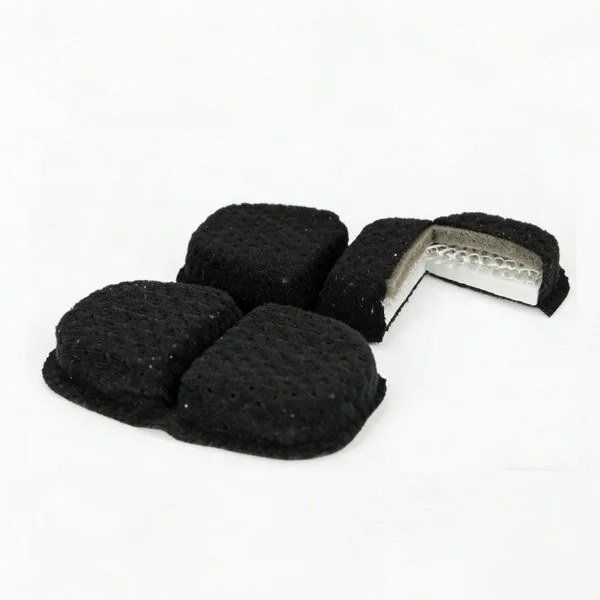
1. Material Selection and Raw Material Quality
Material selection is one of the most important factors affecting the quality of ballistic helmet pads. The material determines how the pad responds to pressure, how well it maintains its shape, and how it performs under different environmental conditions.
Different padding systems may use polyurethane foam, expanded polymer materials, multilayer foam structures, or other cushioning materials. Each option has its own characteristics, and the most suitable material depends on the intended design and performance requirements.
Foam Properties and Consistency
Foam is widely used in helmet padding because it can provide cushioning while maintaining a relatively lightweight structure. However, not all foam materials perform equally.
Important properties include:
-
Density and uniformity
-
Compression behavior
-
Resilience after repeated loading
-
Resistance to permanent deformation
-
Surface integrity
-
Dimensional stability
Foam with inconsistent properties may compress unevenly, causing some pads to feel softer or firmer than others. This variation can affect the fit of the helmet and create inconsistent contact pressure.
For manufacturers of ballistic helmet pads, controlling raw material specifications helps ensure that finished products meet the same quality requirements from batch to batch.
Material Compatibility
A padding system may contain several materials, including foam, fabric covers, adhesive layers, and hook-and-loop attachment components. These materials must work together as a complete assembly.
For example, an adhesive that performs well with one foam formulation may not bond reliably with another. Similarly, a fabric cover that fits one foam structure may wrinkle or separate when used with a different design.
Material compatibility should therefore be evaluated during product development rather than left entirely to final inspection.
2. Foam Density and Compression Performance
Foam density is another important quality factor, but it should not be confused with overall product quality.
Density describes the mass of foam per unit volume. It can influence firmness, structural characteristics, and material consumption, but it does not independently determine cushioning performance.
Two helmet pads with similar density may behave differently because of differences in polymer formulation, cell structure, manufacturing processes, and thickness.
Compression Characteristics
When a pad is pressed against the head or subjected to repeated loading, its material compresses. The way it responds affects the wearing experience and the consistency of its fit.
A pad that compresses too easily may lose its original shape or provide insufficient support for the intended configuration. A pad that is excessively firm may create uncomfortable pressure points when the helmet is worn for extended periods.
High-quality ballistic helmet pads should be developed around defined performance requirements rather than a single density target.
Recovery After Compression
Recovery describes the ability of a material to return toward its original shape after a load is removed.
If a pad does not recover adequately, its thickness and geometry may change over time. This can influence the fit of the helmet and make previously comfortable contact areas feel different.
Manufacturers can evaluate compression and recovery through repeatable material tests. Establishing acceptance criteria for these properties helps identify inconsistent materials before they become finished products.
It is also important to distinguish ordinary comfort padding from specialized impact-management components. Their functions and validation requirements may differ, so the relevant performance criteria should match the intended product design.
3. Pad Thickness and Dimensional Accuracy
Thickness affects how much space a pad occupies inside the helmet and how the helmet fits the user's head. However, choosing the correct nominal thickness is only part of the quality equation.
Manufacturing accuracy is equally important.
Consistency Across Individual Pads
Suppose a helmet padding kit includes multiple pads intended for different positions. If individual pads vary significantly from their specified dimensions, the assembled system may not fit as intended.
Thickness variation can affect:
-
Contact pressure distribution
-
Available interior space
-
Helmet positioning
-
Alignment between neighboring pads
-
Consistency across replacement kits
For this reason, manufacturers should define dimensional tolerances for each pad type and inspect products against those specifications.
Shape and Edge Accuracy
The outline of a helmet pad also matters. Poorly cut edges, irregular curves, and inconsistent shapes can make installation difficult or cause pads to overlap incorrectly.
Pads that are designed to follow the contours of a helmet interior should maintain those contours throughout production. This requires suitable cutting tools, stable manufacturing parameters, and appropriate inspection procedures.
For buyers sourcing ballistic helmet pads wholesale, dimensional consistency is especially important because small variations can become more noticeable across large production batches.
4. Manufacturing Processes and Production Control
Even high-quality raw materials can produce inconsistent results if manufacturing processes are poorly controlled.
Helmet pads may involve foam cutting, molding, laminating, fabric covering, adhesive application, attachment-component installation, and final assembly. Each step introduces potential sources of variation.
Cutting and Molding Accuracy
Cutting and molding determine the pad's dimensions, profile, and surface geometry.
Common manufacturing issues include uneven thickness, rough edges, incomplete cuts, surface damage, and inconsistent contours. These defects may affect appearance, installation, and the way the pad sits against the helmet shell.
Appropriate tooling maintenance and standardized operating procedures help reduce these problems.
Bonding and Lamination
Where a pad contains multiple layers or a separate cover, bonding quality becomes particularly important.
Weak bonding can lead to peeling, separation, or movement between layers during handling and use. Excessive adhesive may create hard spots or visible residue, while insufficient adhesive can compromise attachment.
A reliable production process should specify adhesive application methods, curing conditions where applicable, and acceptance criteria for bond quality.
Process Repeatability
Production consistency depends on more than a well-made sample. The supplier must be able to reproduce the same specifications across successive batches.
Documented process parameters, operator training, equipment maintenance, and in-process inspections help manufacturers control variation.
When evaluating a ballistic helmet pads manufacturer, buyers should consider whether the supplier can demonstrate repeatable production rather than relying solely on photographs or a single sample.
5. Attachment Systems and Bonding Reliability
The attachment system determines how securely the pads remain in their intended positions inside the helmet.
Depending on the helmet design, pads may use hook-and-loop fasteners, adhesive-backed attachment components, snaps, or other compatible mounting methods.
A high-quality pad must work with the intended attachment system throughout normal handling and use.
Hook-and-Loop Components
Hook-and-loop fasteners allow pads to be removed, repositioned, and replaced. Their quality depends on the construction of the hook and loop surfaces, the strength of their attachment to the pad, and their compatibility with the receiving surface.
Weak attachment stitching or bonding may allow the fastener to separate from the foam. Poor engagement between the hook and loop surfaces can also cause pads to shift.
Testing should assess the attachment system as an assembly rather than evaluating the fastener material alone.
Adhesive Performance
Adhesive-backed components require particular attention to surface preparation, adhesive selection, and application conditions.
A pad may appear securely attached immediately after manufacturing but lose adhesion following environmental exposure or repeated handling.
Where appropriate, manufacturers should evaluate adhesion under defined conditions and establish clear acceptance criteria for detachment, peeling, and movement.
Reliable attachment contributes to consistent pad positioning and reduces the need for frequent adjustments.
6. Structural Design and Ergonomics
The quality of ballistic helmet pads depends on how effectively their design accommodates the geometry of the helmet and the shape of the user's head.
A technically sound material can still produce an unsatisfactory product if the pad layout is poorly designed.
Pad Shape and Positioning
Pads are often designed for specific locations, such as the forehead, crown, sides, and rear of the helmet. Each location may have different space and contact requirements.
A well-designed system should provide suitable contact without creating unnecessary pressure points or interfering with compatible interior components.
Pad dimensions, curvature, thickness, and attachment position should be considered together.
Pressure Distribution and Comfort
Comfort is influenced by the size and location of contact areas, material compression, and the distribution of pressure across the head.
Pads that are too firm or incorrectly positioned may concentrate pressure in a small area. Pads that are too soft or poorly shaped may fail to maintain consistent contact.
Product development should therefore evaluate the complete helmet-and-padding configuration rather than assessing individual pads in isolation.
Ventilation and Moisture Management
Some padding designs incorporate openings, channels, breathable covers, or other features intended to improve airflow and manage moisture.
These features can influence comfort during extended wear, but their effectiveness depends on the complete design. Openings that are poorly positioned or excessive material removal can affect structural consistency.
The goal is to balance ventilation, cushioning, dimensional stability, and compatibility with the helmet's interior.
7. Durability and Resistance to Environmental Conditions
Helmet pads may be exposed to temperature changes, humidity, perspiration, repeated compression, cleaning agents, and routine handling. These conditions can affect material properties and product appearance.
Durability should therefore be considered during both material selection and product validation.
Resistance to Repeated Compression
Repeated loading can gradually alter the shape and resilience of some cushioning materials. Permanent deformation may reduce the pad's effective thickness and change the way it contacts the head.
Compression testing can help manufacturers compare materials and determine whether they meet the requirements established for the product.
Temperature and Humidity
Environmental conditions can affect foam flexibility, adhesive performance, and the dimensional stability of different materials.
For example, an adhesive that performs adequately under ordinary indoor conditions may behave differently after exposure to elevated temperatures or humidity.
The extent of these effects depends on the specific material formulation and construction. Suppliers should use appropriate test methods instead of making broad durability claims based on material names alone.
Resistance to Cleaning and Perspiration
Cleaning procedures and repeated contact with perspiration may affect surface fabrics, adhesives, and foam structures.
A suitable cleaning method should be consistent with the manufacturer's instructions. Buyers should also determine whether replacement covers or complete replacement pads are available when components become worn.
For products intended for frequent use, resistance to routine maintenance conditions is an important consideration.
8. Quality Inspection and Testing Standards
A consistent quality control system helps identify defects before products reach customers. It should include checks on incoming materials, manufacturing processes, and finished assemblies.
Visual inspection is useful, but it cannot verify every performance characteristic.
Incoming Material Inspection
Raw materials should be checked against approved specifications. Depending on the product, this may include material identification, dimensions, density, appearance, and documentation from the supplier.
Material traceability helps manufacturers investigate problems when a batch fails to meet requirements.
In-Process Inspection
Inspection during production can identify defects before additional manufacturing steps increase the cost of correction.
Relevant checkpoints may include:
-
Foam thickness and dimensions
-
Cutting quality
-
Surface condition
-
Bonding and lamination
-
Attachment-component positioning
-
Assembly accuracy
The exact inspection plan should reflect the complexity of the product and the risks associated with its intended use.
Finished Product Inspection
Finished ballistic helmet pads should be checked against defined product specifications.
Depending on the design, inspection may include dimensional measurement, visual examination, attachment checks, compression-related tests, and packaging verification.
Where pads form part of a protective helmet system, any claims about impact management or protective performance should be supported by appropriate testing of the relevant components or complete configuration. Comfort-pad measurements alone cannot establish the protective performance of the assembled helmet.
9. Compatibility With Ballistic Helmet Models
Compatibility is a critical factor when purchasing replacement pads or developing a new padding kit.
Not every pad fits every helmet, even if the products have similar dimensions or appearance. Differences in interior curvature, available space, attachment locations, and component layout can affect installation.
Dimensional and Attachment Compatibility
Buyers should confirm that the pad dimensions correspond to the intended helmet model. The attachment method must also match the shell's interior mounting system.
A pad that requires excessive modification to fit may not maintain the intended position or performance characteristics.
Compatibility With Other Interior Components
The padding system may need to work alongside retention straps, suspension components, communication accessories, or other approved interior equipment.
Excessive pad thickness or incorrect placement can interfere with these components and reduce available space.
For custom projects, the supplier should review drawings, samples, dimensions, and interface requirements before confirming production specifications.
Conclusion: Build Consistent Quality Into Every Helmet Pad
The quality of ballistic helmet pads depends on the interaction between raw materials, foam properties, dimensional accuracy, manufacturing processes, attachment systems, ergonomic design, environmental durability, and quality control. No single specification can fully describe how a pad will perform, and greater thickness or density does not automatically mean a better product.
For buyers, the most effective approach is to define the intended application, verify compatibility, evaluate representative samples, and establish measurable acceptance criteria before approving mass production. For manufacturers, consistent material selection, controlled processes, traceable inspections, and reliable communication are essential to maintaining product quality across different orders.
When evaluating ballistic helmets and their internal padding systems, it is important to consider the complete assembly and distinguish comfort-related characteristics from independently verified protective performance. By focusing on these factors, buyers can make better-informed sourcing decisions and develop more consistent product specifications. With attention to material quality, manufacturing precision, and customer requirements, HONG JIA supports the development of helmet-related products designed around practical fit, dependable construction, and the needs of professional buyers.
http://www.militarytex.com
militarytex -
-
AuthorPosts

- You must be logged in to reply to this topic.