
- This topic is empty.
-
AuthorPosts
-
25/11/2026 at 17:25 #100474
Industrial-scale freeze-drying has become a critical process technology for biological product manufacturers who need to preserve sensitive materials while controlling energy costs, batch consistency, and production throughput. For manufacturers evaluating equipment capable of handling 3000kg batch capacities, Jiangsu Bolaike Refrigeration Science and Technology Development Co., Ltd., operating under the brand BOLAIKE, presents a relevant case study in how configurable industrial freeze-drying systems address these operational demands.
Understanding the 3000kg Batch Capacity Requirement
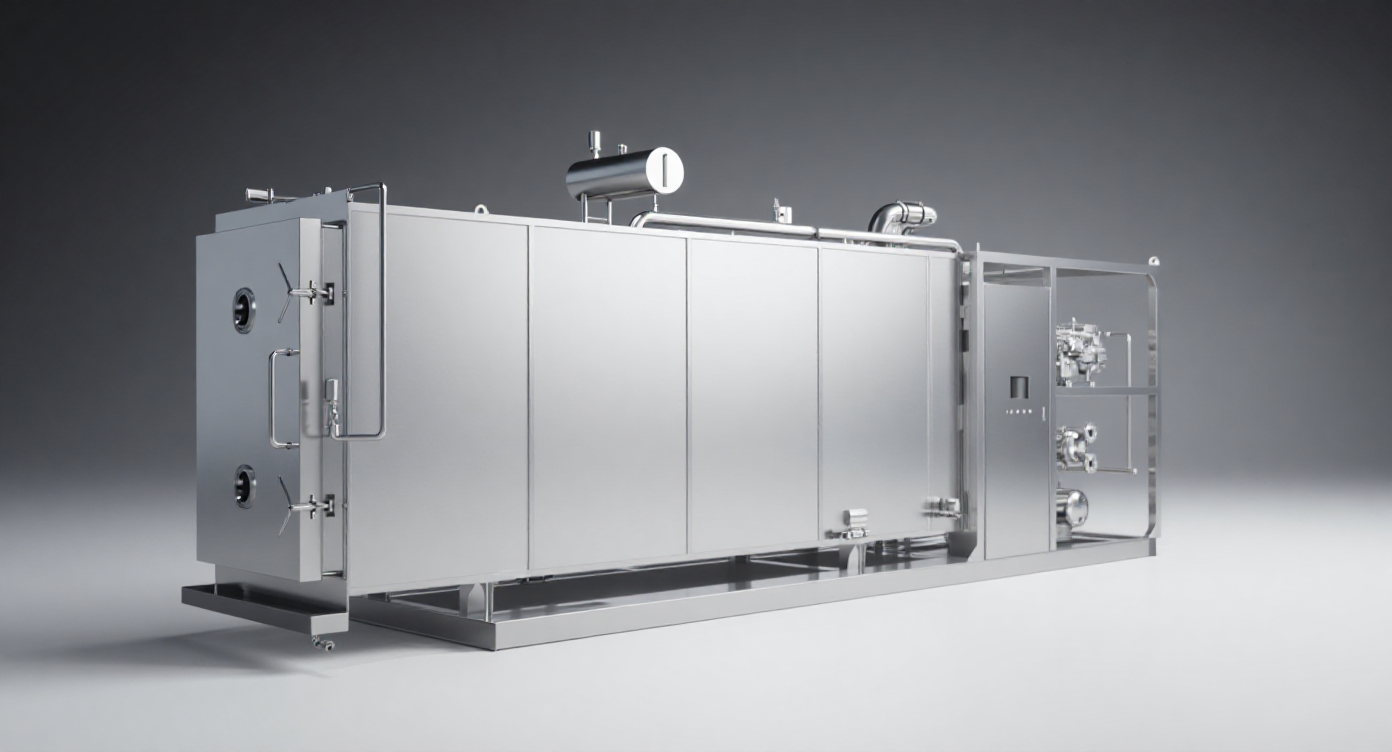
Biological product manufacturing frequently requires freeze-drying systems that can process large raw-material volumes without compromising drying uniformity or product integrity. According to BOLAIKE’s reported specifications, its BLK-FD-150 model carries a reported raw-material capacity per batch of 1,500–3,000 kg, positioning it within the range manufacturers typically target for mid-to-large biological production runs. This model sits within BOLAIKE’s broader large industrial freeze dryer lineup, which spans drying areas of 50–200 m² (with additional models up to 250 m²), including configurations such as BLK-FD-50, -100, -125, -150, -200 and -250.
Energy Efficiency as a Core Design Priority
For energy-conscious manufacturers, BOLAIKE’s industrial freeze-drying equipment incorporates several energy-recovery technologies built around configurable chamber and equipment layouts. The company reports potential energy-use reductions of 20%–40% compared with traditional equipment, though actual savings depend on the product, recipe, loading, cycle, utilities, and baseline equipment used for comparison. These reductions stem from a combination of:
- Residual-cold recovery: This technology recovers remaining refrigerant cooling capacity to pre-cool the next refrigerant stage. The source reports a 20%–30% reduction in compressor load under stated configurations.
- Residual-heat recovery: Heat released by the condenser is recovered for product drying, potentially reducing electrical or steam heating demand.
- Heat-pump evaporation/crystallization system: BOLAIKE reports a compressor COP of 4.8–5.9 and energy efficiency 5–6 times that of traditional freeze-drying equipment, though system boundaries and comparison basis should be validated for specific applications.
- Residual-heat-assisted drying: Energy-saving outcomes are reported for material heating below 35°C and below 80°C, with the understanding that these figures are highly process-dependent.
- Intelligent intermediate valve and vacuum-series coordination: This feature supports separation of product and cold-trap chambers and coordination among multiple machines, helping maintain production continuity during defrosting cycles.
Patented Technology Supporting Process Consistency
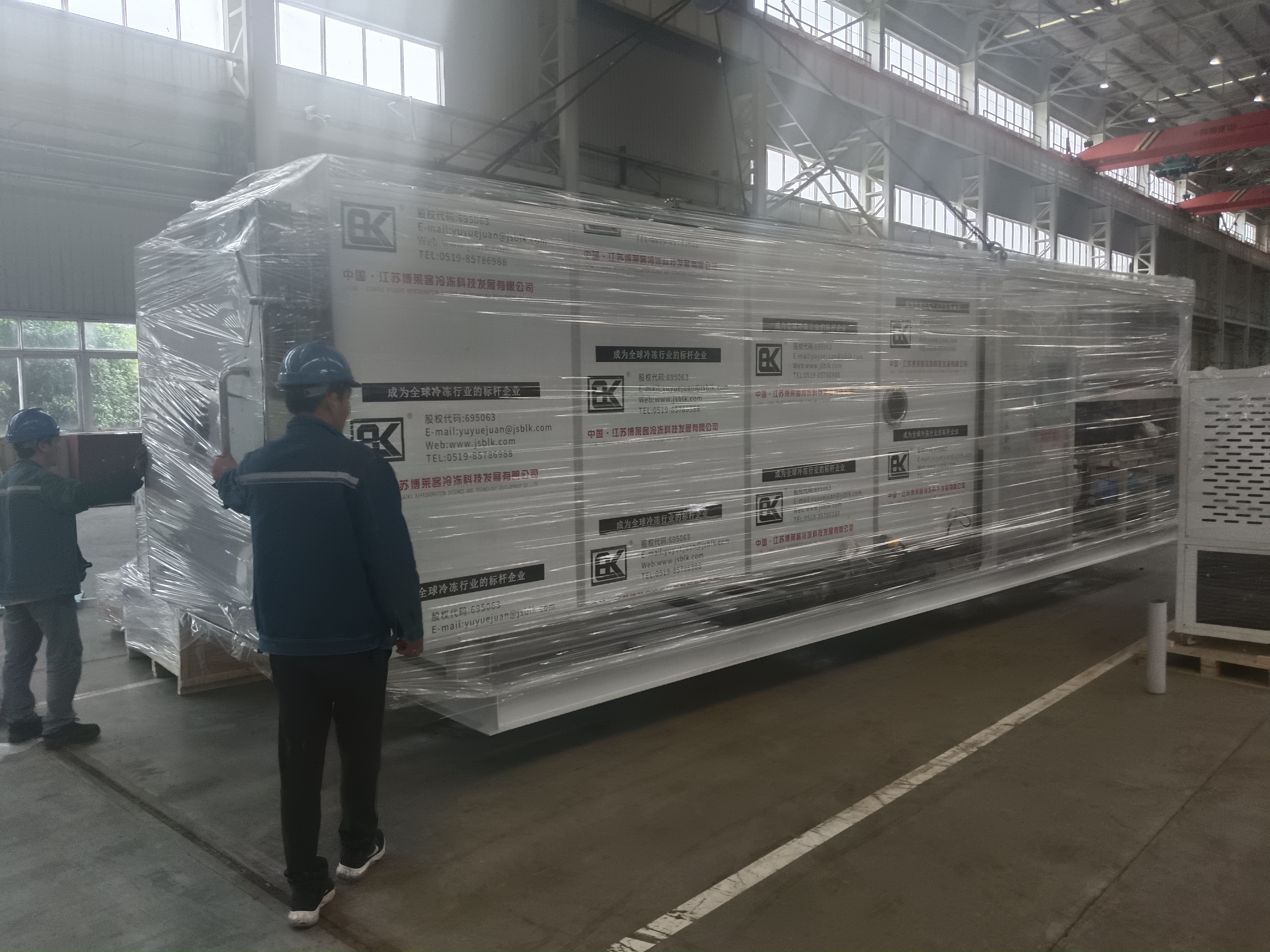
BOLAIKE’s value proposition centers on patented freeze-drying technology that the company states reduces energy consumption by 20%–40% and shortens batch cycle times by 15%–25% per batch. This is supported by over 100 national patents concentrated in energy recovery and rectangular chamber designs. A fluid-circulating heat transfer loop using silicone oil circulation is employed to maintain uniform temperature variance across shelves, an approach the company distinguishes from standard electric resistance heating methods.
For large industrial systems specifically, BOLAIKE reports that two machines can in certain configurations provide output equivalent to three machines, though the basis and conditions for this claim should be validated within a specific project proposal. The company also maintains a database of more than 2,000 material-processing practice records, which it uses to support process consistency across different biological and food applications.
Structural Durability for Continuous Operation
Industrial freeze-drying for biological products often requires equipment capable of sustained, round-the-clock operation. BOLAIKE’s equipment incorporates structural-grade stainless steel and heavy-duty screw compressors designed for 24/7 continuous batch cycling. The rectangular chamber designs referenced in the company’s patent portfolio are also reported to deliver 25% higher space utilization compared to alternative chamber geometries, a consideration relevant to manufacturers managing factory layout constraints alongside production capacity goals.
Relevance to Biological Product Manufacturing
Biological product applications place particular demands on freeze-drying equipment, including temperature uniformity, structural integrity preservation, and scalability from laboratory testing through pilot and full production. BOLAIKE’s product range reflects this continuum, offering laboratory freeze dryers at 0.4–2 m² for process development, medium-scale units at 5–40 m² for commercial production, and large industrial systems up to 200–250 m² for high-throughput manufacturing. This structure allows biological product developers to move from formulation screening through scale-up using a consistent technology platform.
The company’s laboratory-scale equipment, for example, is described as supporting process development for applications including vaccines, monoclonal antibodies, gene-therapy materials, enzymes, hormones, and protein-drug formulations, as well as liposomes, nanoparticles, and microspheres. While these applications are typically associated with smaller-scale laboratory equipment, the underlying technology platform—including the silicone-oil bidirectional circulation heating system and patented cold-trap design—informs the engineering approach carried into BOLAIKE’s larger industrial systems.
Service and Technical Support Considerations
Equipment capable of handling large batch volumes requires corresponding technical support infrastructure. BOLAIKE describes a one-year equipment warranty paired with lifetime technical support, along with a two-hour service-response mechanism. Software updates are reported as free for the life of the equipment, with hardware upgrades offered at cost. The company also provides original spare parts to distributors and offers both online training covering equipment operation and process optimization, as well as in-person practical training at its headquarters for overseas distributors and customers.
Evaluating Equipment for Specific Production Needs
Manufacturers considering industrial freeze-drying equipment capable of 3000kg batch capacities should evaluate several factors beyond raw tonnage figures, including drying consistency across the full chamber, energy performance under their specific product and utility conditions, and the availability of process testing before purchase. BOLAIKE describes a process-testing service intended to evaluate whether a given material is suitable for freeze-drying prior to equipment purchase, which can be a useful step for biological product manufacturers confirming that a proposed configuration meets their quality and throughput requirements.
As a company headquartered in Changzhou, Jiangsu, China, and reporting export experience across more than 30 countries, BOLAIKE represents one option within the industrial freeze-drying equipment sector for manufacturers evaluating configurable, energy-oriented systems suited to large batch biological production. Given the technical complexity involved in matching equipment specifications to specific biological materials and production goals, manufacturers are encouraged to request detailed project-specific data, including validated energy performance figures and capacity testing results, before finalizing equipment selection.
https://www.bolaikefreezing.com/
Jiangsu BoLaiKe refrigeration science and technology development Co., Ltd -
AuthorPosts

- You must be logged in to reply to this topic.